Pomp Without Progress: Why the Trump-Xi Summit Will Struggle Beyond the Spectacle
High-stakes optics mask unbridgeable geopolitical divides. An in-depth analysis of why the Trump-Xi summit delivers theatrical diplomacy rather than structural solutions.
 Rajeev

The Illusion of Accord Beneath the Red Carpet
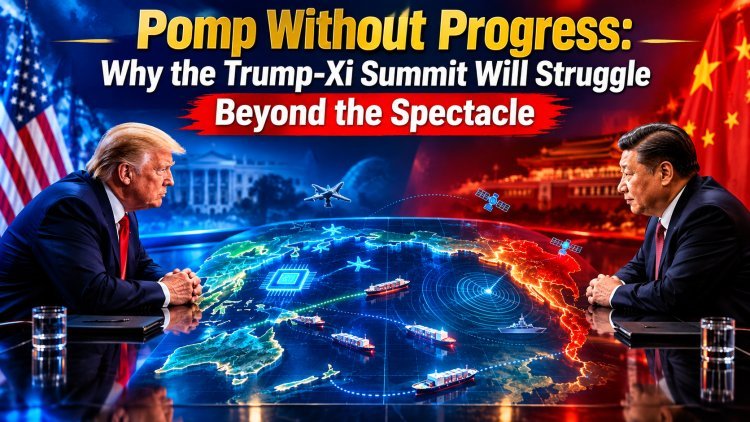
Diplomatic summits between the world’s two largest economies are rarely simple meetings; they are theater on a global stage. Red carpets, formal honors, tailored banquets, and carefully scripted planeside greetings project an aura of steady control. Yet behind the pageantry lies an intractable reality: the structural conflicts defining modern United States-China competition are beyond the reach of cosmetic head-of-state summits.
While both leaders gain short-term domestic utility from appearing in control, the fundamental divergence in their national interests guarantees that any perceived harmony will remain fragile and performative.
The Domestic Agendas Driving the Pageantry
Neither side entered this bilateral dialogue looking to overhaul its strategic trajectory. Instead, the meeting serves specific, immediate political imperatives:
-
Transactional Momentum for the White House: A polished presidential summit allows the administration to project commanding dealmaker status, tout targeted purchasing pacts (such as agricultural commodities or aerospace orders), and demonstrate economic stewardship without committing to multilateral concessions.
-
Strategic Floor-Setting for Beijing: For President Xi Jinping, high-level diplomatic deference acts as a powerful domestic and international signal. It solidifies China’s standing as an undeniable equal, preserves export momentum by buying time against further tariffs, and establishes a predictable baseline while domestic political consolidation takes priority.
The optic itself is the objective. When success is measured by the avoidance of overt confrontation rather than genuine reconciliation, the ceiling for concrete outcomes is inherently low.
The Unbridgeable Chasms
The summit inevitably collides with zero-sum strategic fault lines that no joint banquet or handshake can resolve:
-
Technological Decoupling and the AI Race: The contest over next-generation computing, advanced semiconductors, and artificial intelligence is viewed in both capitals through an existential national security lens. Export bans on cutting-edge hardware and reciprocal retaliations on rare-earth supply chains leave virtually no room for mutual compromise.
-
The Taiwan Dilemma and Regional Deterrence: Beijing’s non-negotiable core interest regarding Taiwan directly collides with Washington’s defense partnerships, arms transfers, and deterrence commitments across the Western Pacific. At best, the leaders can only re-state well-worn talking points to avoid accidental escalation.
-
Trade Architecture and Industrial Overcapacity: Ephemeral purchasing agreements cannot repair the persistent trade imbalances, structural state subsidies, and tariff disputes that continue to strain bilateral commercial flows.
Performance Over Policy
Summitry between great powers has increasingly shifted from broad treaty-making toward managed crisis containment. By setting up working committees, exploratory trade boards, or parallel dialogues, leaders substitute process for progress. These mechanisms help bureaucracies handle communication channels, but they do not alter the systemic trajectory of strategic rivalry.
As the television cameras pack up and the flags are lowered, the grand spectacle will give way to the prevailing state of global affairs: an entrenched structural standoff where managed competition, rather than lasting peace, remains the sole realistic baseline.