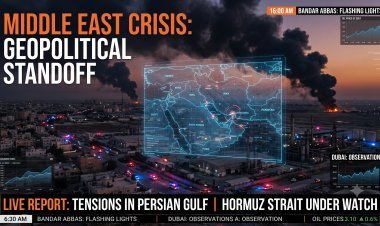



Pentagon’s "Epic Fury": Will Pete Hegseth Use Gravity Nuclear Bombs Against Iran?
As the US-Israel-Iran war intensifies in March 2026, Defense Secretary Pete Hegseth issues a chilling warning from the Pentagon. Discover the reality of gravity bombs and the nuclear shadow over the Middle East.
 Rajeev


The Shadow of "Epic Fury": Pentagon’s High-Stakes Gamble in the Iran-Israel War
March 5, 2026 — The Middle East is witnessing a military campaign unlike any in modern history. Dubbed "Operation Epic Fury" by the United States and "Operation Roaring Lion" by Israel, the conflict has entered a decisive and dangerous phase. At the center of this storm is U.S. Secretary of Defense Pete Hegseth, whose recent briefings from the Pentagon have sent shockwaves through global markets and diplomatic circles.
1. Pete Hegseth and the "Uncontested Airspace" Doctrine
Speaking from the Pentagon on Wednesday, Secretary Pete Hegseth declared that the U.S. and Israel are on the verge of "complete, uncontested control" over Iranian skies. Hegseth’s rhetoric marks a departure from the "strategic patience" of previous years.
"We will fly all day, all night, finding, fixing, and finishing the defense industrial base of the Iranian military," Hegseth stated.
Hegseth has been clear: the mission is to ensure Iran never possesses a nuclear weapon. To achieve this, the Pentagon is moving beyond standard strikes, targeting not just missile silos but the very leadership and command structures of the IRGC.
2. Gravity Bombs vs. The Nuclear Question
A major point of discussion in this conflict is the use of Gravity Bombs. While the term "Nuclear Gravity Bomb" (like the B61 series) often surfaces in headlines, Hegseth has emphasized the devastating power of the U.S. conventional arsenal first.
The U.S. is currently utilizing:
-
GBU-57 Massive Ordnance Penetrator (MOP): A 30,000-pound "bunker buster" designed to reach Iran’s deepest nuclear facilities like Fordow, which is buried nearly 300 feet under solid rock.
-
Precision Gravity Bombs: 500lb to 2,000lb GPS-guided munitions that Hegseth claims the U.S. has a "nearly unlimited stockpile" of.
The "gravity" of the situation lies in whether conventional bunker busters can successfully penetrate sites like Fordow. If they fail, the international community fears the pressure may shift toward tactical nuclear options—a "red line" that has experts on high alert.
3. "This is Not Iraq": The New War Philosophy
Hegseth has aggressively rejected comparisons to past conflicts. He insists that Operation Epic Fury is not a "nation-building exercise" or an "endless war."
-
No Boots on the Ground: Currently, the campaign is restricted to air and sea.
-
Decapitation Strikes: The focus remains on "decapitating" the regime’s leadership following the death of the Supreme Leader on the conflict's first day.
-
Decisive Attrition: The U.S. Navy has already confirmed the sinking of over 20 Iranian vessels, including the prize frigate IRIS Dena.
4. The Global Impact: Is Peace Possible?
While the Pentagon claims "America is winning," the cost is visible. Global oil prices are volatile, and retaliatory strikes have hit U.S. assets in Qatar and the UAE. French President Emmanuel Macron and other EU leaders have expressed concern that the strikes are operating "outside international law," even as they acknowledge the threat posed by the Iranian regime.
A Point of No Return?
Under Pete Hegseth’s leadership, the Pentagon has unleashed a "maximum authority" rules-of-engagement policy. The goal is to finish the war on "America First" terms. However, as the dust settles over Tehran, the world asks: Can airpower alone end a nuclear ambition, or are we just scratching the surface of a much larger conflagration?
What do you think? Is Pete Hegseth’s aggressive "Epic Fury" strategy the right move to prevent a nuclear Iran? Join the conversation in the comments below.