CJP Jantar Mantar Protest: Abhijeet Dipke Detained, Rahul Gandhi Targets CEC Gyanesh Kumar
CJP Jantar Mantar protest: Abhijeet Dipke detained, Rahul Gandhi demands CEC Gyanesh Kumar's removal as Delhi Police impose restrictions over the SIR row.
 Rajeev
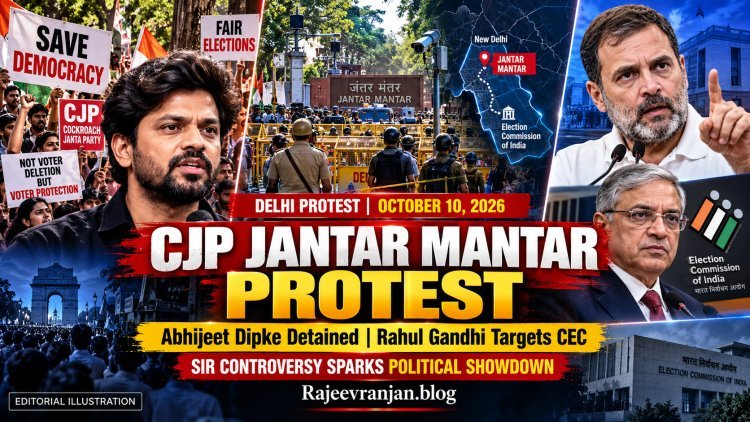

Delhi Turns Into Fortress as CJP's Jantar Mantar Protest Triggers Detentions, Metro Curbs and Political Showdown
What began as a dispute over electoral rolls has grown into a nationwide political confrontation. With protest organisers detained, Rahul Gandhi demanding the election chief's removal and police defending extraordinary security measures, October 10 has become a crucial day in the controversy surrounding India's electoral system.
NEW DELHI, October 10, 2026: Barricaded roads, shuttered Metro stations, heavy police deployments and detained protesters marked an unusually tense Saturday morning in the national capital.
At the centre of the confrontation was a planned demonstration at Jantar Mantar by the youth-led Cockroach Janta Party (CJP), whose supporters are demanding the resignation of Chief Election Commissioner (CEC) Gyanesh Kumar over allegations surrounding the Special Intensive Revision (SIR) of electoral rolls.
The protest, described by organisers as Jantar Mantar 2.0, was scheduled to begin at 10 am.
However, Delhi Police denied permission for the gathering and introduced extensive security restrictions across the capital.
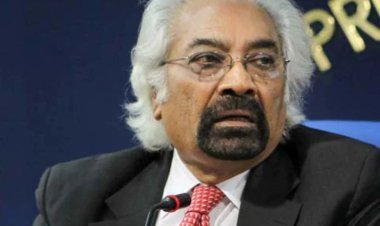
In one of the day's most significant developments, CJP founder Abhijeet Dipke was detained after arriving at Delhi's Indira Gandhi International Airport from Mumbai.
Two other senior movement leaders, Saurav Das and Ashutosh Ranka, were also detained, according to a statement from the organisation.
The developments came as Leader of the Opposition Rahul Gandhi escalated his criticism of the Election Commission, publicly demanding Gyanesh Kumar's removal.
The confrontation has raised questions about electoral transparency, the right to peaceful assembly and the limits of police restrictions during political demonstrations.
Abhijeet Dipke Detained at Delhi Airport Before Planned Protest
For CJP founder Abhijeet Dipke, the journey from Mumbai to Delhi ended before he could reach Jantar Mantar.
Dipke had travelled to the capital to lead the demonstration against the Chief Election Commissioner.
However, police approached him at the airport following his arrival.
According to Reuters, television channels reported that officers asked him to call off the demonstration because authorities had prohibited the gathering.
The movement subsequently confirmed that Dipke had been detained.
CJP leaders Saurav Das and Ashutosh Ranka were also taken into custody after their flight landed.
Earlier, Dipke had insisted that the demonstration would proceed despite the possibility of police action.
He maintained that protesters were exercising their democratic right to question the functioning of the Election Commission.
The reported detentions have become a major flashpoint in the confrontation between CJP activists and law enforcement.
A key legal distinction: Preventive detention or temporary police custody should not automatically be described as a formal arrest. The available reports confirm that the three leaders were detained; they do not establish that all three were formally arrested and charged.
Why Is CJP Demanding Gyanesh Kumar's Resignation?
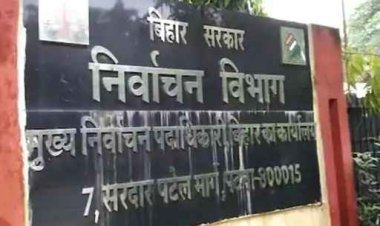
The immediate dispute concerns the Election Commission's Special Intensive Revision of electoral rolls.
The SIR exercise is intended to verify voter information and identify entries that require correction, removal or additional scrutiny.
However, opposition parties and CJP activists have alleged that the revision process has resulted in large-scale voter deletions and could unfairly disadvantage particular groups of voters.
The controversy intensified after reports raised questions about disagreements within the Election Commission concerning the revision process.
According to Reuters, approximately 130 million voter entries — equivalent to 13 crore — have been identified for deletion during the verification exercise.
The Election Commission has maintained that the exercise is a routine process intended to improve electoral-roll accuracy.
It has also emphasised that the revision remains incomplete and that voters whose names were incorrectly removed can apply for re-enrolment.
The BJP has rejected allegations that the voter-list exercise was designed to benefit the ruling party.
Opposition leaders, meanwhile, argue that electoral-roll changes require greater transparency and independent scrutiny.
Crucially, the reported 13 crore figure should not be interpreted as proof that 13 crore eligible voters were deliberately disenfranchised. The figure concerns entries affected during the revision process, and the eligibility and status of individual voters remain subject to verification.
Rahul Gandhi Intensifies Attack on Chief Election Commissioner
The controversy has also drawn strong intervention from Congress leader Rahul Gandhi.
On Saturday, the Leader of the Opposition reiterated his demand that Chief Election Commissioner Gyanesh Kumar step down.
In a post on X, Gandhi declared:
"Gyanesh Kumar will go. This government will go."
He added that the restoration of democracy would follow.
His remarks came as police continued to impose restrictions around central Delhi to prevent the proposed demonstration.
Gandhi has been prominent in opposition protests against the SIR exercise and the Election Commission's leadership.
His involvement has given the controversy greater political visibility.
However, Rahul Gandhi's political campaign and the CJP's October 10 demonstration should not be treated as the same organisation or protest initiative.
The CJP demonstration was separately organised by Dipke's movement and allied student groups.
The Congress and other opposition parties have nevertheless raised overlapping concerns about electoral-roll revisions and the functioning of the Election Commission.
Delhi Police Deploy Thousands as Security Restrictions Intensify
As the planned protest approached, authorities introduced extensive security arrangements across the national capital.
Police personnel were deployed at major roads, transport hubs and locations surrounding Jantar Mantar.
Barricades and concrete blocks restricted access to several routes.
Police also conducted checks on buses and private vehicles entering the city.
According to The New Indian Express, more than 35,000 police and paramilitary personnel were deployed across Delhi.
Reuters reported that police detained approximately 200 protesters in central Delhi, citing a police source.
The restrictions also affected public transportation, with Metro stations and certain markets closed and mobile internet services suspended in affected areas.
Delhi Police said the measures were temporary precautions designed to maintain public order, prevent overcrowding and protect public safety.
Protest organisers rejected the restrictions, arguing that the authorities were preventing citizens from exercising their democratic right to demonstrate peacefully.
The dispute highlights the tension between public-order enforcement and the constitutional right to peaceful assembly.
CJP Jantar Mantar Protest: Key Developments
The following chronology reflects reports available during the morning of October 10, 2026. It is not a continuously updating live feed.
| Date / Time | Major Development |
|---|---|
| October 1 | CJP leaders announce plans for protests demanding CEC Gyanesh Kumar's resignation. |
| October 2–9 | Political demonstrations and police restrictions intensify over the SIR controversy. |
| October 9 | Delhi Police deny permission for the October 10 gathering and increase security. |
| October 10, early morning | Metro restrictions, road barricades and security checks affect parts of Delhi. |
| October 10, morning | Abhijeet Dipke travels from Mumbai to Delhi for the planned protest. |
| October 10 | Police detain Dipke, Saurav Das and Ashutosh Ranka at Delhi airport. |
| October 10 | Rahul Gandhi reiterates his demand for Gyanesh Kumar's removal. |
| Latest verified update | Police report multiple detentions as protest organisers challenge restrictions on the demonstration. |
Sources: Reuters, The Indian Express, The New Indian Express and The Times of India.
What Is the Cockroach Janta Party?
Despite its unusual name, the Cockroach Janta Party has emerged as a youth-led protest movement.
The organisation is associated with activist Abhijeet Dipke and has attracted attention through demonstrations against government decisions and institutional controversies.
The movement previously gained visibility during protests over examination-related issues.
Its latest campaign focuses on electoral integrity and the resignation of Chief Election Commissioner Gyanesh Kumar.
The group has framed its October 10 demonstration as part of a wider effort to defend democratic institutions.
CJP activists argue that electoral processes must be transparent and that public authorities should remain accountable.
The movement has also attracted interest from student organisations and politically engaged young people.
However, its broader public support and organisational reach should not be judged solely from claims made by protest organisers.
The Four Major Demands Behind the Protest
According to statements attributed to CJP founder Abhijeet Dipke, the movement is seeking four principal changes:
- Resignation of Chief Election Commissioner Gyanesh Kumar: Organisers hold him politically and institutionally accountable for the disputed electoral-roll exercise.
- Withdrawal of the Special Intensive Revision: The movement wants the current SIR exercise scrapped because of concerns over voter-list deletions.
- Free and fair elections: Protesters are demanding stronger safeguards against alleged electoral irregularities.
- Changes to the appointment process: CJP has called for a more independent and neutral mechanism for selecting Election Commissioners.
These demands reflect the movement's position. They do not establish that the Election Commission or its officials have committed wrongdoing.
What Does the Election Commission Say About the SIR Controversy?
The Election Commission has defended its electoral-roll verification process.
According to data cited by Reuters, approximately 13 crore entries were affected during the revision exercise.
These included roughly:
| Category | Approximate Number |
|---|---|
| Voters recorded as having relocated | 6.3 crore |
| Individuals who could not be traced | 3 crore |
| Deceased voters | 2.8 crore |
| Total entries identified across the exercise | Approximately 13 crore |
The listed categories are rounded and do not constitute an exhaustive breakdown of the reported total.
The Commission has stated that the revision is intended to identify outdated, duplicate or otherwise ineligible entries.
It also says that incorrectly excluded voters have opportunities to seek re-enrolment.
Opposition parties question whether those safeguards are sufficiently accessible and effective.
The BJP maintains that allegations of deliberate electoral manipulation are politically motivated.
Both the accuracy of the voter lists and the fairness of the verification process remain central to the public debate.
The Bigger Political Battle: Election Integrity vs Public Order
The confrontation in Delhi is no longer limited to an argument over voter-list administration.
It has become a broader dispute involving three important questions.
First, how can electoral rolls be kept accurate without excluding legitimate voters?
Regular verification is necessary to address deaths, migration and duplicate registrations.
However, errors in the process can prevent eligible citizens from exercising their voting rights.
Second, how should concerns about electoral institutions be investigated?
Public confidence depends on transparent procedures, accessible correction mechanisms and credible oversight.
Political allegations require evidence and fair examination rather than assumptions of guilt.
Third, how far can authorities restrict public demonstrations?
India's Constitution protects peaceful assembly, subject to lawful and reasonable restrictions.
Police have responsibilities to maintain public safety and prevent violence.
However, restrictions on protest activity can also face scrutiny over whether they are necessary, proportionate and applied without political discrimination.
These competing considerations explain why the Jantar Mantar controversy has developed into a significant national political story.
What Happens Next?
Several questions remain unresolved.
The immediate concern is the legal status of detained CJP leaders and protesters.
It also remains unclear whether organisers will attempt further demonstrations after the police restrictions.
Political attention will remain focused on the Election Commission's response to criticism of the SIR process.
Congress and other opposition parties may continue demanding greater transparency and accountability.
Meanwhile, the government and law-enforcement authorities will face questions about the scale of restrictions imposed in Delhi.
The final consequences of the confrontation will depend on subsequent developments, including any court proceedings, official decisions or further protests.
A Protest That Has Become a Test of Institutional Trust
Saturday's events in Delhi illustrate the intensity of the dispute over India's electoral-roll revision process.
The detention of Abhijeet Dipke and other CJP leaders has added a new dimension to the controversy.
Rahul Gandhi's intervention has also elevated the issue into a prominent confrontation between the opposition and the BJP-led government.
Yet the central questions extend beyond individual political leaders.
They concern the credibility of electoral institutions, the protection of voting rights and the freedom to demonstrate peacefully.
The Jantar Mantar confrontation is ultimately about how democratic institutions respond when citizens challenge their decisions — and how those challenges are handled within the law.