"We Are Victims, Not Terrorists": Iran's Pezeshkian Rebuts Trump at UNGA
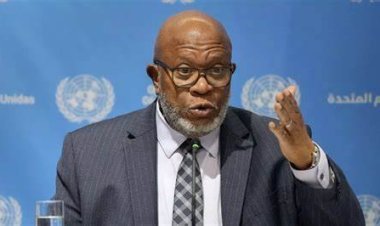
Addressing the UN General Assembly, Iranian President Masoud Pezeshkian hit back at Donald Trump's terror labels, asserting Iran is a victim of aggression and vowing never to surrender.
 Rajeev
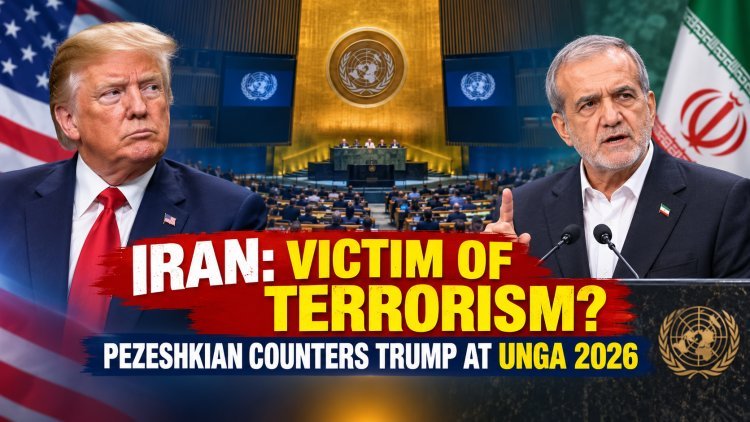

Diplomatic Firestorm at the UN: Pezeshkian Rejects Trump’s Terrorism Accusation
The diplomatic showdown between Washington and Tehran reached high tension at the 81st session of the United Nations General Assembly in New York. Taking the international podium just twenty-four hours after U.S. President Donald Trump described Iran as the world's "number one sponsor of terror" and openly weighed military annihilation, Iranian President Masoud Pezeshkian mounted an unyielding counter-offensive.
Pezeshkian dismantled Washington's narrative before world leaders, declaring that Iran is not a purveyor of terror, but rather its chief victim.
"We Are Not Terrorists": The Counter-Attack on the UN Stage
Directly answering Trump’s accusations, Pezeshkian presented Tehran’s seven-month conflict with the U.S. and Israel through the lens of national survival and self-defense.
"Yesterday, Trump said we are terrorists. We are not terrorists — we are victims of terrorism," Pezeshkian stated before the General Assembly.
Highlighting the physical toll of joint U.S. and Israeli air raids that began earlier this year, Pezeshkian displayed photographs of damaged civil facilities, including a primary school and civilian sports complexes. He denounced the cross-border strikes and political assassinations across Iranian provinces as genuine acts of terrorism, arguing that innocent civilians have borne the brunt of foreign aggression.
The Iranian President underscored that his nation has simply been defending its borders, asserting firmly that Iran would "never bend at the knee" or buckle under military ultimatums.
Trump's Ultimatum: A Deal or "Annihilation"
Pezeshkian's remarks arrived as a direct riposte to Donald Trump's address delivered from the same rostrum. Trump had framed the Middle East conflict as approaching an absolute fork in the road:
-
Two Binary Outcomes: Trump told world leaders he faced a "big decision" — either broker a sweeping diplomatic agreement allowing Tehran to rebuild, or swiftly "annihilate" the Islamic Republic so it cannot wage war again.
-
Backdoor Overtures: Despite the combative rhetoric, Trump revealed that lower-level diplomatic contacts had quietly taken place on the sidelines of the UN summit involving American envoys Steve Witkoff and Jared Kushner.
-
Domestic Stakes: Trump's hardline stance comes against the backdrop of approaching U.S. congressional midterms, with the prolonged military campaign and its impact on domestic fuel markets drawing sharp debate across Washington.
Strait of Hormuz and the Nuclear Deadlock
Beyond the fiery exchange of rhetoric, the broader geopolitical standoff continues to revolve around two critical pressure points:
-
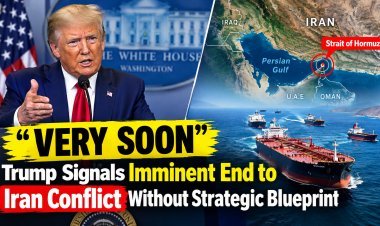
Strategic Chokepoint: Pezeshkian reiterated Iran's tight grip on the Strait of Hormuz, maintaining that Tehran will not permit the crucial waterway to be utilized for military logistics by forces hostile to Iran, while tying maritime passage to concrete relief from Western embargoes.
-
Nuclear Capabilities: Addressing international anxiety over regional non-proliferation, the Iranian President insisted that Iran seeks nuclear technology strictly for civilian energy needs, rejecting claims that Tehran is pursuing atomic weapons while accusing Western powers of turning a blind eye to Israel's unmonitored arsenal.
A Delicate Diplomatic Crossroads
The clash at the United Nations underscores the fragile line separating expanded war from a negotiated compromise in the Persian Gulf. With both leaders staking out maximum leverage before the international community, the coming weeks will determine whether the quiet bilateral exchanges in New York can yield an off-ramp, or if the confrontation will spill into another round of regional escalation.