German, Russian Foreign Ministers Hold Rare Talks in New York Amid Deepening European Tensions
German Foreign Minister Johann Wadephul meets Russian counterpart Sergey Lavrov in New York—the first Berlin–Moscow ministerial talks since 2022—warning the Kremlin against escalation.
 Rajeev
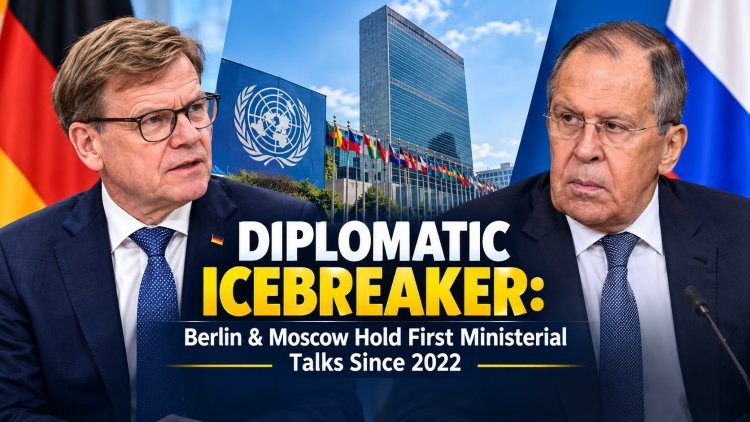

German, Russian Foreign Ministers Hold Rare Talks Amid Rising Tensions
UNITED NATIONS, NEW YORK — In the first face-to-face meeting between German and Russian foreign ministers since the 2022 invasion of Ukraine, Germany’s top diplomat Johann Wadephul sat down with Russian counterpart Sergey Lavrov on the sidelines of the UN General Assembly.
The approximately 20-minute exchange, arranged at Berlin’s request inside a Russian-provided delegation room, concluded with a formal handshake—yet exposed deep divides over the course of the war in Ukraine and broader European security.
A Stark Warning in a Closed Room
Wadephul used the encounter to press Moscow directly on its military posture, demanding that the Kremlin step back from what Berlin characterizes as an unsustainable confrontational trajectory.
"Russia must abandon its dangerous path of escalation toward Germany, Europe, and the NATO alliance," Wadephul said through delegation spokespersons, emphasizing that any restoration of regular bilateral ties requires verifiable steps from Moscow toward ending hostilities in Ukraine.
Russian Foreign Ministry spokesperson Maria Zakharova confirmed the meeting was held at Berlin's initiative prior to Lavrov’s scheduled address to the General Assembly.
Key Takeaways from the New York Encounter
| Agenda Focus | German Position (Johann Wadephul) | Russian Position (Sergey Lavrov) |
| Ukraine Conflict | Urged genuine peace willingness and ceasefire; reaffirmed firm backing for Kyiv. | Defended military actions as protective measures; dismissed Western calls as unilateral demands. |
| European Security | Warned against hybrid threats, airspace violations, and regional sabotage. | Accused NATO and the EU of imposing exclusionary rules on global balance. |
| Multilateral Order | Pushed for accountability under the UN Charter and multilateral peace structures. | Championed a "multipolar world order" through BRICS; opposed permanent UN Security Council seats for Germany or Japan. |
Simmering Hybrid Tensions and Sabotage Fears
The diplomatic encounter arrived against a backdrop of deteriorating security relations between Berlin and Moscow.
Minutes after concluding the meeting, Lavrov mounted the General Assembly podium and launched a blistering critique of Western governments, singling out European leaders for maintaining what he labeled an outdated, Western-dominated global order.
While neither side signaled a political breakthrough, the brief dialogue in New York re-established a direct ministerial contact point that had been frozen since January 2022, when former German Foreign Minister Annalena Baerbock traveled to Moscow in the final weeks preceding full-scale hostilities.