UPSC Centenary: PM Modi Urges Civil Servants to Put 'Nation First, Citizen First'
Marking 100 years of UPSC at Bharat Mandapam, PM Narendra Modi called for faster exam cycles, technological overhauls, and a 'Nation First, Citizen First' governance approach.
 Rajeev


UPSC Centenary Celebrations: Prime Minister Modi Tells Aspirants and Officers to Put "Nation First, Citizen First"
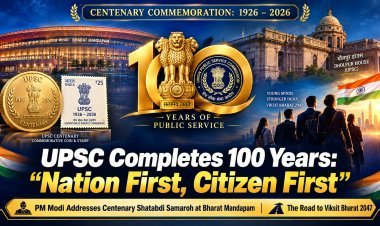
NEW DELHI — Marking the centenary of the Union Public Service Commission (UPSC), Prime Minister Narendra Modi called on civil servants and prospective aspirants to root their governance ethos in a single guiding compass: "Nation First, Citizen First."
Addressing a gathering of serving bureaucrats, retired commission heads, State Public Service Commission chairpersons, and young aspirants at Bharat Mandapam, the Prime Minister framed the institution's 100-year milestone not merely as a historic retrospective, but as a critical launchpad toward a developed India by 2047.
Established on October 1, 1926, as the Public Service Commission, the constitutional body has steered India’s administrative framework across a century of profound political, technological, and socio-economic transformation.
Modernising the Examination Machinery
A central pillar of the Prime Minister’s address focused on the lived realities of millions of young aspirants across the country.
The Prime Minister underscored the direct personal and economic toll prolonged selection calendars impose on young candidates:
-
Shortening Recruitment Cycles: Urged commissions across the Centre and states to significantly compress the timeline from preliminary exams to final merit declarations.
-
Relieving Youth Burden: Pointed out that year-long or delayed examination cycles create heavy financial, psychological, and logistical strains on middle-class families paying for relocation, coaching, and transit.
-
Tech-Driven Overhaul: Emphasised modern digital tools, automated processing, and standardisation across state commissions to preserve transparency and fortify institutional trust.
From Rule-Bound To Role-Bound: The 2047 Mandate
Calling the next quarter-century decisive for national development, the Prime Minister noted that officers entering the administrative corridors today will serve as the core steering committee for India’s centenary of independence.
"The era of operating in administrative silos is behind us. The civil servant of today must transition from being purely 'rule-bound' to actively 'role-bound.' When a file reaches an officer's desk, the decision must not only clear legal procedures—it must pass the litmus test of citizen impact."
The Prime Minister pointed out that public expectations have dramatically transformed. Modern governance, he asserted, demands administrative responsiveness rather than red tape, requiring district administrators to view public grievances not as daily backlog, but as opportunities to rebuild public faith in state machinery.
Commemorative Releases Mark the 100-Year Milestone
To commemorate the centenary, the Prime Minister released three official items documenting the commission's institutional evolution:
-
Centenary Commemorative Coin: Minted specially to celebrate 100 years of formal recruitment in Indian public services.
-
Commemorative Postage Stamp: Issued by India Post to honor the legacy of constitutional recruitment.
-
Institutional Casebook: A compendium titled '100 Landmark Judgements – Shaping the Policies of UPSC and Public Service Commissions in India', tracing legal precedents that defined meritocracy, equal opportunity, and administrative independence in public appointments.
| UPSC Milestone Snapshot | Key Takeaway |
| Foundation Date | October 1, 1926 (Under Lee Commission recommendations) |
| Centenary Venue | Bharat Mandapam, Pragati Maidan, New Delhi |
| Key Directives | Faster exam turnarounds, AI/tech integration, reduction of applicant overhead |
| Core Mantra | "Nation First, Citizen First" |
Closing his address, the Prime Minister reminded upcoming administrators that an exam rank is merely an entry pass into responsibility, not a certificate of privilege. The true measure of civil service success, he reiterated, lies in touching the life of the person standing at the very end of the queue.