Saudi Air Defenses Intercept Drone Near Mecca: Coalition Issues "Red Line" Warning
Royal Saudi Air Defense Forces intercepted and destroyed an armed Houthi drone targeting the holy city of Mecca. Read the full geopolitical breakdown of the incident and escalation.
 Rajeev
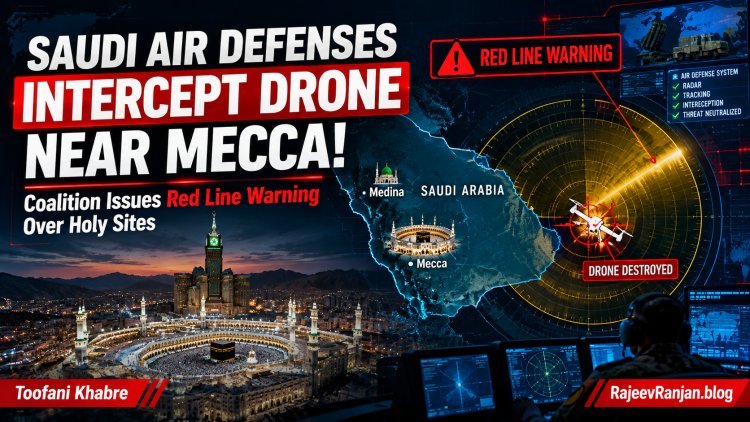

Saudi Air Defenses Intercept Hostile Drone Headed for Mecca: Coalition Declares Protection of Holy Sites a "Red Line"
Riyadh / Middle East Desk: Tensions across West Asia reached a critical high after the Saudi-led coalition in Yemen confirmed that the Royal Saudi Air Defense Forces intercepted and destroyed an armed drone heading toward the holy city of Makkah Al-Mukarramah (Mecca). The unmanned aerial vehicle (UAV) was shot down before entering restricted airspace surrounding the city, with debris falling in uninhabited areas to the south.
Coalition spokesperson Major General Turki Al-Malki condemned the incident as a "hostile and terrorist act" launched by Houthi forces. In a stern warning broadcast across international media, the coalition declared that the security of Islam’s holiest sites and millions of pilgrims remains a "red line" that will be defended with decisive military deterrence.
1. Details of the Interception South of Mecca
According to official coalition statements, the Royal Saudi Air Defense Forces identified and tracked the hostile drone:
-
Interception Window: The UAV was neutralized on Tuesday evening before breaching the restricted airspace surrounding Mecca.
-
Debris Impact: The intercepted drone disintegrated, with wreckage scattering in uninhabited terrain south of the city. No casualties or damage to infrastructure were reported.
-
Historical Precedent: Coalition officials noted this marks the second documented attempt to target the holy city, recalling a July 2017 incident involving a ballistic missile.
2. Escalating Rhetoric: "Red Line" and Regional Security
The attempted strike comes amid escalating military activity across the region. Major General Turki Al-Malki emphasized that targeting the birthplace of Islam—the destination for millions of Hajj and Umrah pilgrims annually—is an aggressive provocation aimed at spreading panic.
"The security of the Two Holy Mosques and the pilgrims is a red line. The Joint Forces Command will not hesitate to take all necessary and deterrent measures to protect the Sanctities."
— Maj. Gen. Turki Al-Malki, Saudi Coalition Spokesperson
3. Strategic Context: Broader Escalation in West Asia
| Factor | Strategic Impact & Context |
| Cross-Border Escalation | The attack follows intensified cross-border drone and missile strikes targeting southern Saudi cities. |
| Red Sea Maritime Corridor | Escalation near the Bab el-Mandeb Strait continues to disrupt commercial shipping and global energy supply lines. |
| Diplomatic Fallout | Security measures across Saudi Arabia's air defense perimeter have been elevated to maximum alert. |
Meanwhile, Houthi political representatives dismissed claims regarding Mecca as political rhetoric, while military spokespersons cited ongoing regional airstrikes as the driver of current hostilities.
4. What This Means for Global Security and Energy Markets
-
Air Defense Readiness: The rapid destruction of the drone underscores the operational efficiency of Saudi Arabia's multi-layered air defense network (utilizing Patriot and advanced interception systems).
-
Oil & Maritime Security: Heightened military maneuvers near key energy infrastructure and Red Sea trade routes continue to add a geopolitical risk premium to global crude prices.
-
Diplomatic Pressure: International observers and global institutions are monitoring the situation closely to prevent a wider regional conflict that could endanger civilian infrastructure and international transit.
Vigilance Around the Holy Sites
The interception of the drone south of Mecca serves as a reminder of the fragile security landscape in the region. With the Saudi-led coalition reiterating its "red line" stance, global attention remains focused on diplomatic efforts to prevent further escalations while maintaining defense readiness around Islam's holiest sites.