Diplomatic Breakthrough or Calamity? Trump Confirms ‘Very Good’ Secret Talks with Iran at UN Amid Strait of Hormuz Standoff
Donald Trump confirms senior envoys held a three-hour "very good" meeting with Iran's delegation at the UN General Assembly. Explore Tehran's conditions, the Strait of Hormuz crisis, and the prospects of a ceasefire deal.
 Rajeev
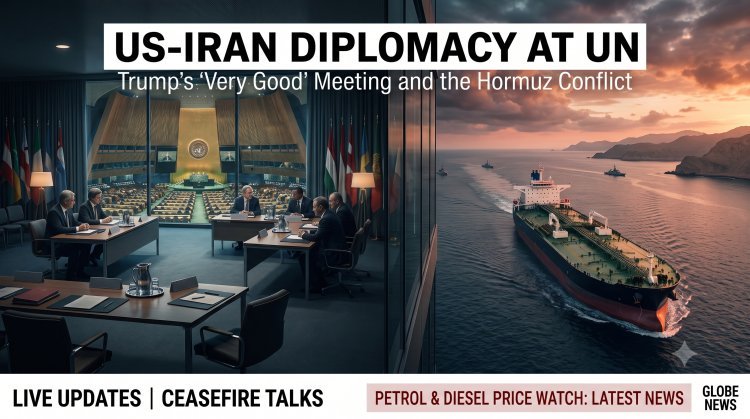

A Rare Diplomatic Opening in New York
Diplomatic corridors at the United Nations General Assembly in New York witnessed a dramatic shift when U.S. President Donald Trump announced that American envoys had engaged in a lengthy, high-stakes meeting with an Iranian delegation on the sidelines of the summit. Describing the three-hour dialogue as "very good," Trump signaled a tentative opening to de-escalate months of military hostilities that have paralyzed key waterways in the Persian Gulf and destabilized the broader Middle East.
Speaking to journalists, Trump stated that U.S. representatives Steve Witkoff and Jared Kushner took part in the talks, which concluded just hours before world leaders convened for high-level deliberations. While striking an uncharacteristically restrained tone about the progress behind closed doors, Trump framed the moment in stark terms: Tehran now faces a definitive crossroads between an economic renaissance under an enforceable deal or outright regional obliteration.
Inside the 3-Hour Talks: Who Met Whom?
The discreet encounter marks the first known direct or proximate exchange between top-tier U.S. and Iranian negotiators since direct talks collapsed earlier in the summer:
-
Key Delegations: U.S. Special Envoy Steve Witkoff and strategic adviser Jared Kushner engaged with the Iranian cohort headed by Foreign Minister Abbas Araghchi, alongside mediation backchannels facilitated by regional emissaries from Qatar and Pakistan.
-
Positive Signals: Emerging from the session, Witkoff noted the encounter felt constructive, while Trump affirmed to reporters that a subsequent meeting is tentatively set to take place in the near future.
-
Rubio’s Diplomatic Door: U.S. Secretary of State Marco Rubio affirmed Washington’s willingness to hold direct leader-to-leader interactions, acknowledging that President Trump remains open to engaging anyone capable of resolving entrenched regional conflicts.
Tehran’s Demands: Unlocking the Strait of Hormuz
Despite the guarded optimism coming from Washington, Tehran's state-aligned diplomatic channels maintain a resolute posture. Iranian negotiators utilized the meeting to register strict prerequisites before any durable ceasefire or full maritime reopening can occur:
-
Immediate Maritime De-escalation: An unconditional end to the naval blockade throttling regional transit lanes.
-
Economic Concessions: The swift unfreezing of sanctioned sovereign financial assets held in foreign escrow accounts.
-
Regional Security Assurances: A cessation of hostile military operations across interconnected regional fronts.
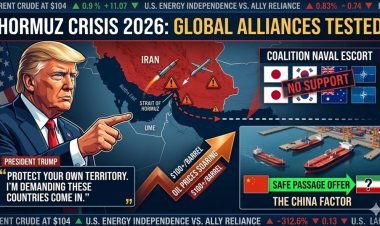
Central to the discussion is the partially choked Strait of Hormuz—the critical artery responsible for roughly one-fifth of global petroleum throughput. While maritime shipping remains fraught with heightened insurance premiums and rerouted cargo itineraries, an actual easing of tensions could calm erratic international crude benchmarks.
Between Peacemaking and ‘Total Annihilation’
The private talks contrast sharply with Trump’s fiery address delivered from the UN General Assembly podium earlier in the day. In that speech, the U.S. president asserted he faced a momentous decision: allowing Iran to rebuild into a prosperous state or unleashing decisive military strikes to eradicate the Islamic Republic’s defensive and industrial apparatus.
Trump repeated his non-negotiable red line: Iran will under no circumstances be permitted to develop or field a nuclear weapon. Meanwhile, domestic political considerations hover over the diplomatic clock. With crucial U.S. midterm elections approaching in November, the administration is juggling mounting global scrutiny over defense stockpiles and regional stability against the domestic imperative to project peace through strength.
What Happens Next?
While no signed pact or binding ceasefire framework emerged from the New York talks, the willingness of both Washington and Tehran to sit at the same table underscores the sheer unsustainability of a perpetual war of attrition. Over the coming days, backchannel mediators will test whether Tehran’s demands on sanctions relief and Hormuz transit can align with Washington’s insistence on verifiable nuclear rollbacks.
For global commodity traders, regional governments, and consumers worldwide, the outcome of this delicate diplomatic channel will dictate whether energy markets stabilize—or face another violent inflationary spiral.