


Hormuz Crisis 2026: Trump’s Naval Coalition Fails to Launch? Why Japan, Australia, and NATO are Saying "No"
As the US-Iran war chokes the Strait of Hormuz, President Trump demands a 7-nation naval coalition. Explore why Japan, Australia, and NATO partners are hesitating and the role of China in this global energy standoff.
 Rajeev

Hormuz Under Siege: The $100 Oil War and the Battle for the Straits
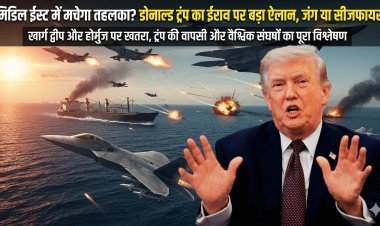
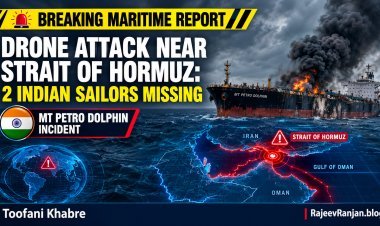
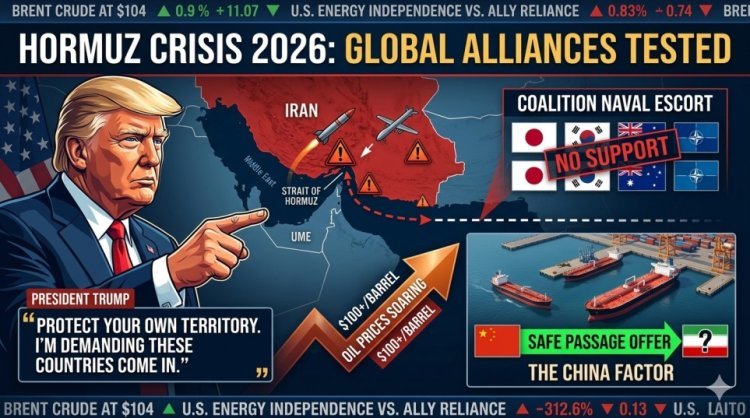
The third week of the US-Israel-Iran conflict has shifted from land-based strikes to a high-stakes maritime blockade. The Strait of Hormuz, through which 20% of the world’s daily oil supply flows, is now an active combat zone. Following a series of Iranian drone attacks and the suspected laying of sea mines, shipping traffic has plummeted by nearly 90%.
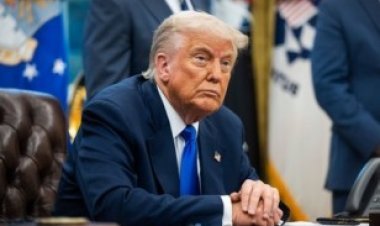
In response, President Donald Trump, speaking from Air Force One, issued a blunt ultimatum to the international community: "Protect your own territory."
The "Coalition of the Hesitant"
President Trump has reportedly reached out to at least seven nations—including Japan, South Korea, Australia, France, the UK, and even China—to form a naval escort force. However, the "America First" commander-in-chief is finding that allies are not eager to sail into "harm's way."
-
Japan: Prime Minister Sanae Takaichi cited constitutional and legal constraints, stating Tokyo has "no immediate plans" to deploy the Self-Defense Forces.
-
Australia: Canberra has distanced itself, with officials stating they have not been formally asked and are not contributing ships to the reopening of the waterway.
-
The UK & France: While Prime Minister Keir Starmer and President Emmanuel Macron have discussed the crisis, they have emphasized the need for de-escalation rather than joining a direct military confrontation. Trump noted that Starmer was reluctant to put British aircraft carriers in danger.
Trump’s Warning to NATO
The President has not hidden his frustration, specifically targeting NATO partners. Trump warned that the alliance faces a "very bad future" if members do not assist in securing the strait. His argument is simple: since the U.S. is now energy independent and receives only about 1% of its oil from the region, the countries that rely on Gulf crude (like China and Europe) should shoulder the cost of policing it.
"I’m demanding that these countries come in and protect their own territory... It’s the place from which they get their energy." — Donald Trump
The China Factor and "Safe Passage"
In a surprising geopolitical twist, Iran has reportedly begun offering "safe passage" to Chinese vessels while maintaining its blockade against the U.S. and its allies. Reports indicate that some non-Chinese ships are even attempting to scramble their AIS (Automatic Identification System) signals to identify as Chinese-owned to avoid attack.
While Trump has urged China to be a "constructive partner" in reopening the strait, Beijing’s response remains measured, focusing on diplomatic de-escalation rather than military involvement.
Economic Fallout: A Global Energy Shock
The functional closure of the strait has sent shockwaves through the global economy:
-
Oil Prices: Brent crude has spiked between 40% to 50%, trading consistently above $104 per barrel.
-
Gas Prices: U.S. consumers have seen a jump of over 70 cents per gallon in just two weeks.
-
Supply Chains: Major airlines, including Emirates, have faced temporary groundings and flight diversions following drone-related security incidents near Dubai International Airport.
Who Will Blink First?
As the U.S. Navy claims to have decimated Iran’s conventional manufacturing, the "asymmetric" threat of mines and shore-based drones remains enough to keep the world’s tankers at bay. Without a unified naval coalition, the world faces a prolonged energy crisis that could reshape global alliances for decades.