Tehran Open to ‘Real Diplomacy’ but Ready for ‘Apocalyptic War,’ Foreign Minister Warns
Iranian Foreign Minister Abbas Araghchi warns that Tehran is prepared for an "apocalyptic war" if US strikes resume, while maintaining Tehran remains open to genuine diplomacy.
 Rajeev

Tehran Open to ‘Real Diplomacy,’ Ready for ‘Apocalyptic War’
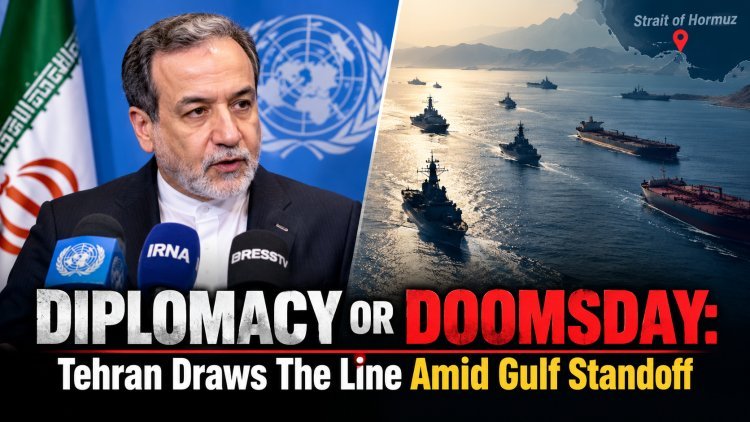
NEW YORK / TEHRAN — Iranian Foreign Minister Abbas Araghchi delivered a stark dual message from the sidelines of the United Nations General Assembly, declaring that while the Islamic Republic traveled to New York to pursue de-escalation, it remains prepared for an “apocalyptic war” should Washington resume military strikes.
The sharp warning follows public friction over a proposed seven-day framework to de-escalate hostilities and reopen the strategic Strait of Hormuz—an initiative recently dismissed by U.S. President Donald Trump.
‘We Came to Forge Peace’
Writing on social media following an appearance on NBC’s Meet the Press, Araghchi pushed back against assertions that Tehran is attempting to negotiate from a position of terminal weakness.
"President Pezeshkian and I did not come to New York to sell a war. We came to forge peace," Araghchi stated.
"Iran nonetheless remains steadfast in the face of any aggression—even if it comes to an apocalyptic war. At the same time, we are ready for real diplomacy."
Speaking on U.S. television, Araghchi emphasized that Tehran had altered its strategic calculations after months of confrontation.
"We don’t care about U.S. midterm elections. We care about our national interests," he said, adding that the choice between negotiated settlement and sustained conflict ultimately rests with the White House.
The Fate of the Seven-Day Hormuz Plan
At the core of current diplomatic friction is a sequenced, seven-day roadmap submitted by Tehran through Qatari intermediaries.
In exchange, Tehran demanded:
-
The cessation of hostile naval operations and trade blockades outside Iranian terminals.
-
Immediate sanctions relief allowing the export and sale of Iranian crude.
-
The unfreezing of immobilized sovereign assets held in international financial institutions.
President Trump publicly brushed aside the offer over the weekend, asserting that sanctions pressure had forced Tehran’s hand. However, Araghchi noted that Iranian diplomats have yet to receive formal, written notification through Qatari backchannels, underscoring that public political posturing does not necessarily match confidential mediation efforts.
Maritime and Nuclear Stakes
┌────────────────────────────────────────────────────────────────────────┐
│                        THE DIPLOMATIC CROSSROADS                       │
├──────────────────────────────────┬─────────────────────────────────────┤
│ The Path of "Real Diplomacy"     │ The Risk of Escalation              │
│ • Phased reopening of Hormuz     │ • Resumption of direct airstrikes   │
│ • Targeted sanctions relief      │ • Total maritime transit paralysis  │
│ • Unfreezing of foreign assets   │ • Deepening regional proxy clashes  │
│ • Structured confidence-building │ • Unchecked nuclear stockpiling     │
└──────────────────────────────────┴─────────────────────────────────────┘
Addressing lingering international concerns over Tehran's nuclear program, Araghchi reiterated that uranium enrichment serves domestic civilian purposes and noted that Iran had signaled openness to discuss caps on 60%-enriched material. However, Tehran insisted that broader nuclear limits must follow initial confidence-building steps rather than precede them.
With one-fifth of global crude supply historically tied to the passage through the Strait of Hormuz, energy analysts warn that rhetoric of "doomsday" military engagement leaves little margin for miscalculation. As delegations depart the UN General Assembly, the standoff remains balanced on whether regional intermediaries can translate Tehran's dual posture into structured talks before deterrence fails entirely.