Middle East Tensions Flare: US Embassies Issue High-Alert Warnings Over Rapid Escalation Risks
The US State Department and regional embassies across the Middle East have issued urgent security alerts warning of rapid military escalation, travel disruptions, and potential retaliatory strikes. Read the full analysis.
 Rajeev

Escalating Tensions Trigger Coordinated Security Alerts Across US Missions
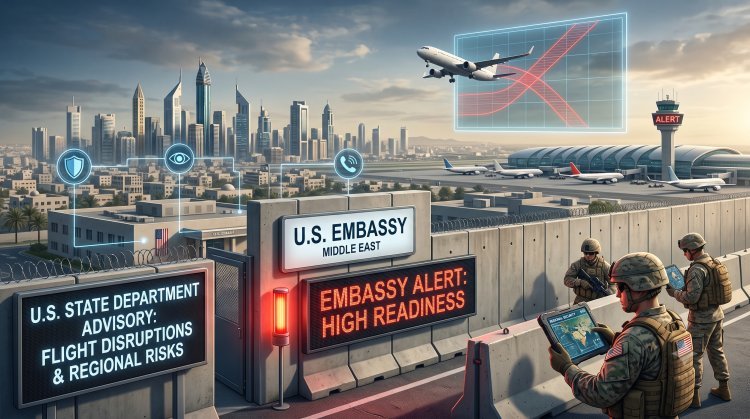
United States diplomatic missions across the Middle East—spanning Saudi Arabia, Israel, and adjacent regional hubs—issued synchronized security alerts advising American citizens and international travelers to exercise heightened vigilance.
The warning follows renewed regional cross-border hostilities, including intercepted missile strikes and drone engagements targeting critical infrastructure and civilian transit hubs. In response, the US Department of State cautioned that the broader military conflict has the potential to escalate rapidly without warning, creating volatile operational environments for commercial aviation, diplomatic personnel, and foreign nationals.
Key Directives Issued by US Embassies
The coordinated advisory emphasizes immediate tactical awareness for personnel on the ground:
-
Aviation & Transit Disruptions: Travelers must anticipate unexpected airspace closures, route cancellations, and transit rerouting across major Gulf corridors. Air travelers are instructed to verify flight manifests directly with carriers before arriving at departure terminals.
-
Heightened Threat Environment: Diplomatic bulletins highlight that Iranian-aligned groups continue to target commercial logistics lines and government infrastructure. The alert notes that US interests, multinational business facilities, and affiliated institutions worldwide could face retaliatory actions.
-
Safety Protocols: Citizens currently located in elevated-risk zones have been advised to map proximate hardened shelters, avoid public assemblies or protests, maintain emergency power reserves, and enroll in the Smart Traveler Enrollment Program (STEP) for real-time diplomatic notifications.
Strategic Drivers Behind the Regional Advisory
The prompt for this wide-scale alert centers on fragile regional dynamics. Despite periodic diplomatic overtures and mediation efforts, proxy hostilities surrounding key trade lanes in the Red Sea and Gulf borders have intensified.
Targeting attempts near civilian transit hubs and key municipal installations have pushed defense readiness postures to their highest levels. US authorities underscored that even regions not actively hosting direct combat maneuvers could face spillover repercussions, particularly regarding air corridor safety, logistics supply chains, and emergency consular access.
Global and Economic Implications
The security posture has reverberated beyond diplomatic channels into energy and commodities markets:
-
Energy Shipping Concerns: Heightened readiness near crucial maritime transit chokepoints continues to trigger risk premiums on commercial tanker insurance and maritime freight routes.
-
Aviation Logistics: International carriers connecting Western and Asian markets through Gulf transfer points are reviewing route clearances, with several airlines adding precautionary alternate-fuel allowances in case of abrupt diversions.
-
Diplomatic Momentum: While diplomatic missions remain operational for emergency citizen support, standard consular workflows may adjust in response to localized threat evaluations.
The situation remains fluid. International observers and regional travelers are urged to monitor real-time updates from official civil defense authorities and foreign affairs advisories before undertaking regional transits.