Trump Warns Time Is Coming on Iran: 'We Blow Them Up or Make a Deal'
President Donald Trump warns the standoff with Tehran will end "very soon, one way or the other," saying the U.S. faces a choice between a deal and military strikes.
 Rajeev
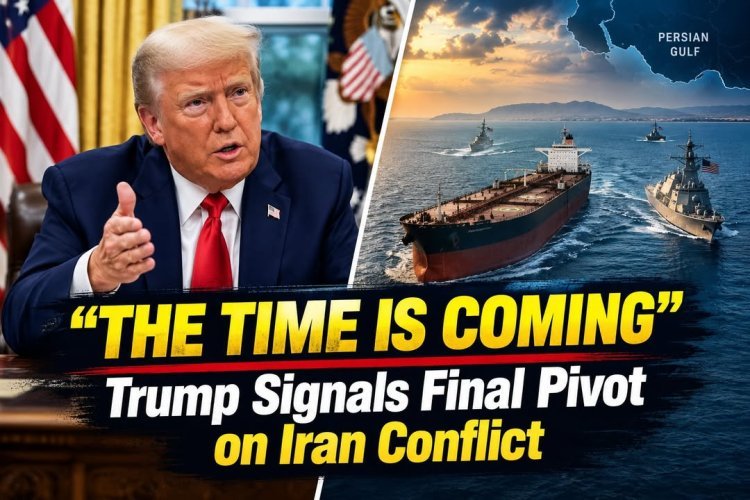

Trump Warns 'Time Is Coming' on Iran: Signals Choice Between Diplomatic Deal and Military Strikes
WASHINGTON — President Donald Trump issued his starkest ultimatum yet regarding the protracted standoff with Iran, declaring that the United States will soon be forced to decide whether to reach an elusive diplomatic pact or launch direct military strikes.
Speaking to reporters in the Oval Office, Trump made clear that his patience with diplomatic backchannels is wearing thin, framing the confrontation as a binary choice that must be resolved without delay.
"Maybe you blow them up," Trump said when questioned on how Washington could negotiate terms with Tehran's leadership.
The remarks underscore a sharp hardening of rhetoric from the White House, even as regional mediators in Qatar continue to exchange proposals aimed at ending months of naval friction, trade blockades, and commercial shipping disruptions in the Strait of Hormuz.
Mixed Signals in the Backchannels
The president’s confrontational language follows days of conflicting reports surrounding behind-the-scenes negotiations.
Trump took to his Truth Social platform this week to push back against reports suggesting Washington had offered quiet concessions on crude sanctions.
"I offered them NOTHING!" Trump wrote, insisting that Tehran had overplayed its negotiating position under severe economic strain.
Yet despite the public walkbacks, diplomatic engagement has not collapsed entirely.
Nuclear Red Lines and Regional Calculus
At the core of the impasse is the long-running dispute over Iran's nuclear capabilities. Washington has insisted that any maritime truce or sanctions reduction must include verifiable curbs on Iranian uranium enrichment thresholds.
Tehran, led by Foreign Minister Abbas Araghchi, has countered that sovereign defense and nuclear programs remain entirely separate from maritime navigation in the Persian Gulf. Araghchi recently warned that while Iran prefers diplomacy, its forces stand prepared for a direct confrontation if Washington opts for military escalation.
┌────────────────────────────────────────────────────────────────────────┐
│                   THE ESCALATION AT A GLANCE                           │
├───────────────────────────────────┬────────────────────────────────────┤
│ The White House Position          │ Tehran's Stance                    │
│ • Demands verifiable nuclear caps │ • Demands unfreezing of ~$12B      │
│ • Enforces maritime port blockades│ • Seeks crude export sanctions off │
│ • Declines to rule out pre-emptive│ • Rejects nuclear curbs in trade   │
│   military strikes                │   negotiations                     │
│                                   │                                    │
│ Strategic Impact                  │ Immediate Flashpoint               │
│ • Heightened naval war insurance  │ • Commercial flow through the      │
│ • Volatility across crude futures │   Strait of Hormuz (~20% global oil│
│ • Diplomatic mediation via Doha   │   consumption)                     │
└───────────────────────────────────┴────────────────────────────────────┘
Energy Security and the Path Forward
Trump's warning that "the time is coming" signals that Washington views the status quo as untenable.
Whether the president's Oval Office comments represent genuine tactical preparation for an offensive or maximum-pressure brinkmanship ahead of a final compromise, the timeline for an off-ramp appears to be running out.



























![States PCS: Bihar GK [बिहार सामान्य ज्ञान एवं सामान्य अध्ययन प्रश्न]](https://rajeevranjan.blog/uploads/images/2026/09/image_380x226_6a9e6f69b286c.jpg)