Explosions Rock Chabahar, Bandar Abbas & Qeshm Island: US Airstrikes Hit IRGC Targets Along Strait of Hormuz!
Multiple explosions have been reported across southern Iran, including Bandar Abbas, Chabahar, and Qeshm Island. Read the full breaking report on US CENTCOM airstrikes against IRGC military installations.
 Rajeev

Explosions Rock Southern Iran: US Launch Strikes on IRGC Targets Across Bandar Abbas, Qeshm Island, and Chabahar
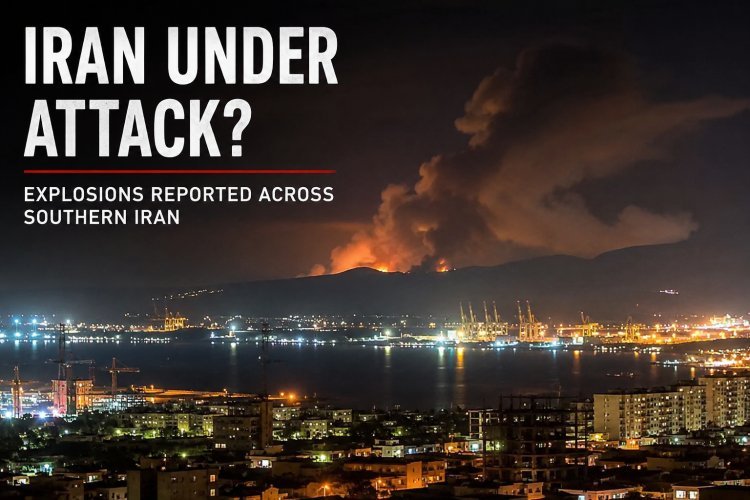
WASHINGTON / TEHRAN (World News Desk): The Persian Gulf and the Gulf of Oman have plunged into renewed military volatility after a series of massive explosions reverberated across key coastal regions in southern Iran. According to international reports and Iranian state broadcasters, strategic maritime hubs—including Bandar Abbas, Qeshm Island, and Chabahar—were hit in a coordinated wave of military strikes targeting assets linked to the Islamic Revolutionary Guard Corps (IRGC).
The military operation follows heightened confrontations in the Strait of Hormuz and recent projectile assaults on commercial shipping and regional defense installations.
1. US CENTCOM Confirms Waves of Tactical Strikes
United States Central Command (CENTCOM) confirmed that American military forces carried out targeted offensive strikes against several IRGC-operated facilities along Iran’s southern coastline.
-
Targeted Assets: US military officials stated that the bombardment specifically targeted IRGC air defense networks, radar systems, maritime mine-laying capabilities, coastal communication nodes, and drone infrastructure.
-
Official Justification: CENTCOM declared that the strikes were executed in response to repeated attempts by paramilitary units to disrupt commercial shipping corridors along the Strait of Hormuz and target coalition personnel in the region.
-
Washington's Stance: US leadership warned against any counter-retaliation from Tehran, signaling that any further military escalation would invite an even more severe response.
2. Strategic Impact on Bandar Abbas, Qeshm Island, and Chabahar
The affected coastal belt forms the backbone of Iran’s naval defense and regional trade infrastructure:
-
Bandar Abbas: As Iran’s principal commercial port and naval gateway on the Strait of Hormuz, heavy explosions were reported near military installations and coastal logistical yards.
-
Qeshm Island: Situated directly in the narrowest neck of the Strait of Hormuz, Qeshm hosts vital radar installations and coastal missile platforms, which bore the brunt of precision strikes.
-
Chabahar Port: Located further east along the Gulf of Oman, blasts were also reported near logistics and maritime control points, raising fresh geopolitical concerns for regional trade corridors.
3. Iran’s Immediate Reaction & Regional Counter-Strikes
In the wake of the strikes, Iranian authorities reported localized damage and immediate security deployments across Hormozgan and Sistan-Baluchestan provinces.
-
IRGC Response: The Revolutionary Guard claimed retaliatory drone and missile engagements against US military barracks and regional installations in neighboring sectors. Air defense systems across several Middle Eastern nations were activated to intercept incoming projectiles.
-
Ceasefire Demands: Iranian diplomatic channels reiterated that stability could only be restored if foreign forces halted strikes on Iranian territory and respected sovereign maritime transit boundaries.
4. Global Economic & Maritime Implications
The renewed exchange of fire immediately sent shockwaves through energy markets and maritime logistics:
-
Oil Price Surge: Crude prices spiked in immediate trading following concerns over potential transit blockades along the Strait of Hormuz—the choke point through which nearly a fifth of the world’s petroleum passes.
-
Shipping Redirection: Global maritime operators have been advised to exercise extreme caution when navigating through the Gulf of Oman and Hormuz, with several major fleets altering routes.
A Precarious Diplomatic Crossroads
With military actions expanding from tactical naval skirmishes to mainland target strikes, the broader geopolitical landscape in the Middle East remains on edge. The international community continues to monitor whether diplomatic channels can contain the crisis before it spirals into a prolonged regional conflict.