



Trump’s Global Tariff Hike: What the Move from 10% to 15% Means for India
US President Donald Trump has raised global tariffs to 15% following a Supreme Court setback. Learn how this 2026 trade shift impacts Indian exports, the IT sector, and the A20-era economy.
 Rajeev
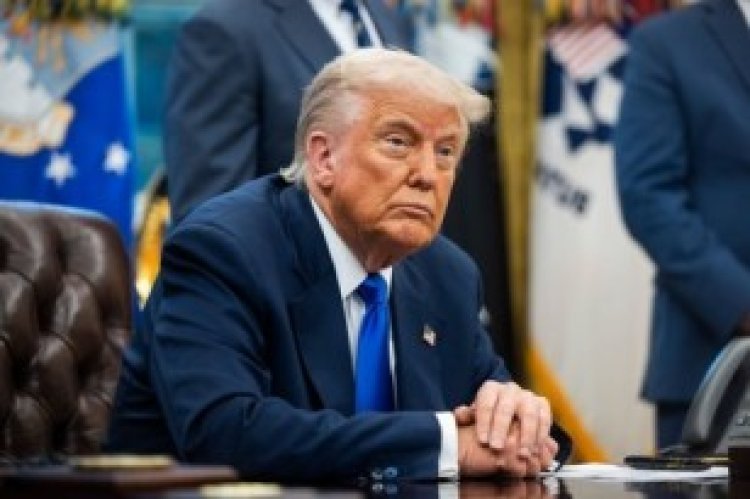

In a weekend that has sent shockwaves through global markets, US President Donald Trump has officially raised the "baseline" global tariff from 10% to 15%.
For India, a key trading partner currently navigating a complex bilateral trade deal, this move shifts the goalposts once again. Here is an in-depth look at why this is happening and what it means for the Indian economy in 2026.
1. The Legal Catalyst: Trump vs. The Supreme Court
The sudden hike wasn't just a policy choice; it was a defiant response to the judiciary.
-
The Ruling: On Friday, the US Supreme Court ruled 6–3 that Trump’s previous "reciprocal" tariffs (which saw some Indian goods taxed at up to 50%) were illegal, stating the President exceeded his authority under emergency laws.
-
The Pivot: To bypass this, Trump invoked Section 122 of the Trade Act of 1974.
This allows the President to impose up to a 15% surcharge for 150 days to address balance-of-payment deficits. -
The "Legally Tested" 15%: By pushing the rate to the absolute legal ceiling allowed under Section 122, Trump is testing the limits of his executive power while signaling to the world that "protectionism is back."
2. What This Means for India: The 18.5% Reality
Before this weekend, India was preparing for an 18% tariff rate under a newly negotiated bilateral framework.
-
Effective Rate: Most Indian goods will now face the 15% global surcharge plus the standard Most Favored Nation (MFN) rates (averaging ~3.4%).
This brings the total burden to roughly 18.4% to 18.5%. -
The "Deal" Paradox: President Trump stated on Saturday that "nothing changes" for the India trade deal.
However, Indian commerce officials are reportedly "studying" the fine print to see if the 15% global levy overrides previous concessions.
3. Winners and Losers in the Indian Market
The impact of a flat 15% tariff is not uniform across all sectors.
| Sector | Impact Level | Why? |
| Textiles & Gems | High | These labor-intensive sectors are highly price-sensitive. A 15% hike makes Indian garments more expensive than rivals in Bangladesh or Vietnam. |
| Pharmaceuticals | Low/Exempt | Critical medical supplies remain largely exempt to prevent price hikes for US consumers. |
| IT Services | Neutral | As a service-based industry, IT is largely insulated from "physical" goods tariffs, though visa policy remains a separate concern. |
| Steel & Aluminum | Severe | These remain under Section 232 "National Security" tariffs, often reaching 50%, untouched by the recent court ruling. |
4. The Rupee and the Stock Market
The announcement has already begun to move the needle on Dalal Street:
-
Currency Volatility: The Indian Rupee is facing pressure, trading near record lows (approx.
₹88.80 per USD), as markets price in the risk of reduced export volumes. -
FII Outflows: Foreign Institutional Investors (FIIs) are showing caution, waiting to see if India will retaliate with counter-tariffs on US apples, walnuts, or Harley-Davidson motorcycles.
5. The Road Ahead: Will There Be Retaliation?
India’s Commerce Ministry has maintained a measured tone, but the pressure to protect domestic industries is mounting.
"We are evaluating the legal mechanism of the 15% surcharge. Our priority remains the finalization of the mutually beneficial trade pact scheduled for next month." — Generalized stance from Indian trade sources.
If the 150-day "temporary" window under Section 122 becomes a permanent fixture, India may have to look toward diversifying its export markets deeper into Europe and the Middle East to offset the US "America First" strategy.





























![States PCS: Bihar GK [बिहार सामान्य ज्ञान एवं सामान्य अध्ययन प्रश्न]](https://rajeevranjan.blog/uploads/images/2026/09/image_380x226_6a9e6f69b286c.jpg)