


“Exemplary Costs”: SC Raps Jairam Ramesh
The Supreme Court cautioned Congress MP Jairam Ramesh to be prepared for exemplary costs while hearing his plea challenging the Centre’s Office Memorandum. Read the full details of the case, arguments, and implications.
 Rajeev
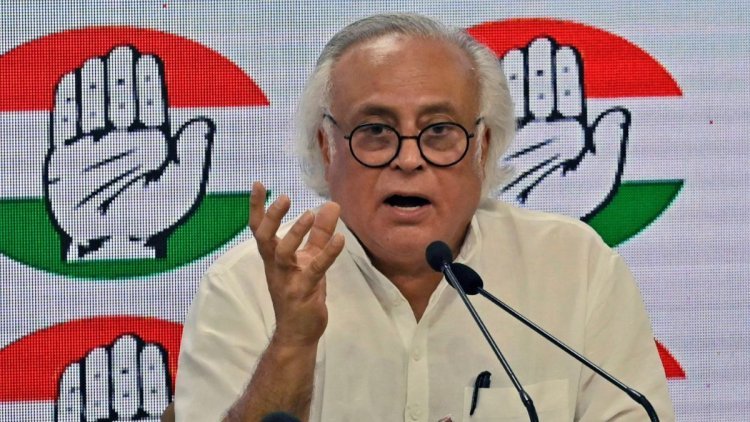

In a significant development, the Supreme Court of India expressed strong displeasure while hearing a petition filed by Congress Member of Parliament Jairam Ramesh challenging an Office Memorandum issued by the Central Government. The apex court warned the petitioner to “be ready for exemplary costs,” signaling its dissatisfaction with the legal grounds presented in the case.
The remarks have triggered discussions in political and legal circles, especially regarding the scope of judicial review in administrative decisions and the responsibility of public representatives when approaching constitutional courts.
Background of the Case
Jairam Ramesh had approached the Supreme Court questioning the validity of a recent Office Memorandum (OM) issued by the Centre. Office Memorandums are official administrative directives issued by government departments to clarify policies, implement procedural changes, or provide operational instructions.
The petition reportedly challenged certain procedural or constitutional aspects of the OM, arguing that it was either arbitrary, inconsistent with existing laws, or violative of constitutional principles. However, during the hearing, the bench appeared unconvinced by the submissions made on behalf of the petitioner.
Supreme Court’s Strong Observations
During the proceedings, the Supreme Court bench made sharp observations regarding the maintainability and substance of the plea. The court reportedly indicated that it was not inclined to entertain what it perceived as an unnecessary or poorly founded challenge.
The bench cautioned the petitioner’s counsel, stating that if the plea lacked merit, the court may impose “exemplary costs.” In legal terms, exemplary costs are financial penalties imposed by the court to discourage frivolous or unwarranted litigation. Such costs are meant to prevent misuse of judicial time and ensure that constitutional courts are not burdened with avoidable cases.
The warning suggests that the court expects litigants—especially elected representatives—to exercise careful judgment before invoking the Supreme Court’s jurisdiction.
Legal Significance of “Exemplary Costs”
The imposition of exemplary costs is not common but has been increasingly used by courts in recent years to curb:
-
Frivolous public interest litigations (PILs)
-
Politically motivated legal challenges
-
Petitions lacking substantial legal basis
-
Attempts to delay policy implementation
By warning about exemplary costs, the Supreme Court sends a clear message about judicial discipline and responsible litigation.
Legal experts note that such observations underscore the court’s focus on maintaining efficiency and protecting its docket from unnecessary matters.
Political and Constitutional Implications
The case has both political and constitutional dimensions.
From a political standpoint, the plea reflects ongoing tensions between opposition leaders and the ruling government over administrative decisions and policy implementation.
From a constitutional perspective, the matter raises questions about:
-
The limits of judicial review over executive actions
-
The scope of Office Memorandums in governance
-
The threshold required for constitutional challenges
-
The accountability of lawmakers when filing legal petitions
While opposition leaders often use judicial mechanisms to question executive actions, courts increasingly scrutinize whether such challenges meet established legal standards.
Centre’s Position
Although detailed arguments from the Centre may unfold further in proceedings, the government is likely to defend the Office Memorandum as a valid administrative action within its executive authority.
Typically, the Centre may argue that:
-
The OM falls within its policy-making powers.
-
There is no violation of constitutional provisions.
-
The challenge lacks sufficient legal grounds.
If the court ultimately finds no substantial constitutional issue, it may dismiss the plea and potentially impose costs, as indicated during the hearing.
What Happens Next?
The Supreme Court may:
-
Dismiss the plea outright if found unmeritorious.
-
Seek further clarification from both parties.
-
Impose exemplary costs if it determines the petition was unnecessary.
-
Issue directions if any procedural irregularity is identified.
The final outcome will determine whether this case becomes an example of judicial restraint or judicial rebuke.
Broader Message from the Judiciary
The court’s warning highlights an evolving trend where higher judiciary bodies are increasingly assertive in discouraging litigation that lacks solid legal footing.
By cautioning about exemplary costs, the Supreme Court reinforces:
-
Responsible use of constitutional remedies
-
Accountability of public representatives
-
Judicial efficiency
-
Respect for administrative processes
Such remarks serve as a reminder that constitutional courts are not arenas for political contest unless genuine constitutional violations are involved.