


Trump vs. Netanyahu: Rift Widens Over Israel’s Strike on Iran’s South Pars Gas Field
A diplomatic rift emerges as President Trump distances the U.S. from Israel’s strike on Iran’s South Pars gas field. Explore the impact on global energy and the U.S.-Israel alliance.
 Rajeev

Diplomatic Friction: Trump Distances U.S. from Israeli Strike on Iran’s Energy Heart
WASHINGTON D.C. / TEL AVIV | March 19, 2026
The ironclad alliance between the United States and Israel is facing a public test of nerves. Following an Israeli strike on Iran's South Pars gas field—the world’s largest natural gas reserve—President Donald Trump has taken to social media to clarify that the U.S. "knew nothing" of the specific operation, highlighting a growing strategic divide over how to handle Iran’s energy infrastructure.
1. The Strike That Shook the Markets
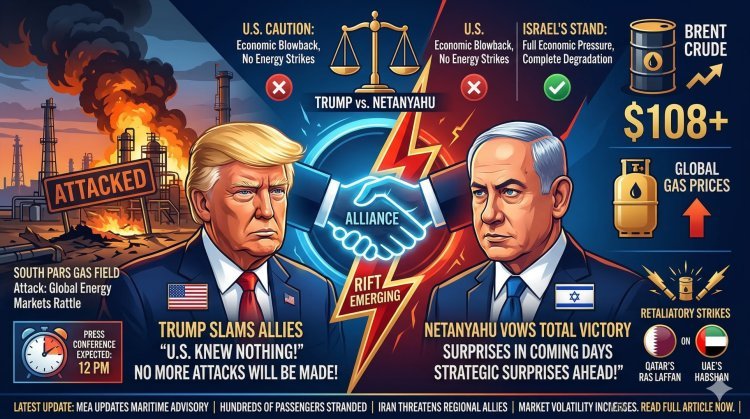
On Wednesday, Israeli forces targeted facilities near Asaluyeh, part of the massive South Pars complex. The attack caused extensive damage and sent global energy markets into a tailspin, with Brent crude spiking over $108 per barrel.
While the U.S. has supported "obliterating" military targets on Kharg Island, the Trump administration had reportedly cautioned Israel against hitting gas fields. The fear in Washington is twofold:
-
Economic Blowback: Destabilizing the global gas supply during a fragile recovery.
-
Retaliation Cycle: The strike immediately prompted Iranian retaliatory attacks on Qatar’s Ras Laffan gas facility and UAE’s Habshan field.
2. Trump’s "No More Attacks" Ultimatum
In a forceful post on Truth Social, President Trump signaled a shift in tone toward Prime Minister Netanyahu’s "Total Victory" strategy. Trump stated that "NO MORE ATTACKS WILL BE MADE BY ISRAEL" on the South Pars field unless Iran targets "innocent" neighbors like Qatar again.
This public directive suggests that the U.S. is seeking to "ring-fence" energy infrastructure to prevent a total global economic meltdown, even as it continues its campaign to neutralize Iran's military capabilities.
3. The Israeli Perspective: "Significant Surprises"
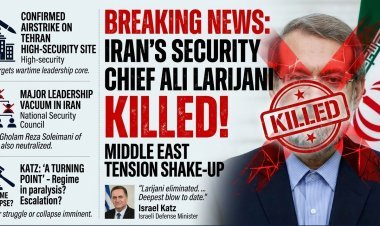
Despite the friction, Jerusalem remains undeterred. Israeli Defense Minister Israel Katz has promised "significant surprises" in the coming days. For Netanyahu, the goal is the complete degradation of the Iranian regime's economic lifeblood, regardless of the immediate market volatility.
Israeli officials argue that "partial strikes" only allow the regime to regroup, and that the only way to end the threat is to strike where it hurts most: the energy sector.
4. Regional Fallout: Qatar and UAE Under Fire
The rift between the U.S. and Israel has left Gulf allies in a precarious position.
-
Qatar has expelled Iranian diplomats following the strike on Ras Laffan.
-
The UAE has suspended operations at the Shah gas field as a precaution.
-
Saudi Arabia reported intercepting ballistic missiles near Riyadh, emphasizing that no energy facility in the region is currently safe.
What’s Next?
The "strategic disconnect" between Trump and Netanyahu could lead to a slowdown in joint operations. If Israel continues to target Iranian energy hubs against U.S. advice, Washington may withhold the "naval escorts" Trump recently demanded from other nations to protect shipping.