


Skies of Fire: US Jets Downed Over Iran—The High-Stakes Black Hawk Rescue Mission That Shook the Middle East
Exclusive report on the intensifying US-Iran aerial war. Detailed breakdown of the downed American pilot, the daring Black Hawk rescue mission, and the global impact of the NTC-KSRJ escalation.
 Rajeev
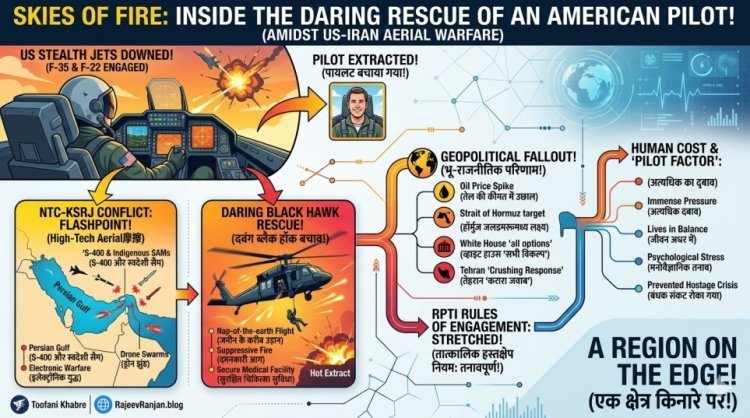

Skies of Fire: Inside the Daring Rescue of an American Pilot Amidst US-Iran Aerial Warfare
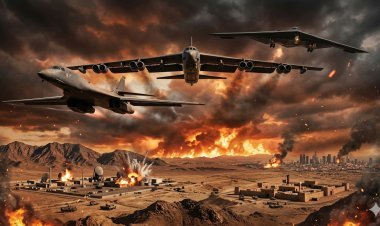
Middle East Bureau: The shadow of a full-scale regional war has darkened further as the aerial corridor between the Persian Gulf and the Iranian mainland becomes a graveyard for high-tech machinery. In a dramatic escalation of the ongoing conflict, reports have emerged of American fighter jets being engaged by Iranian air defense systems, leading to a pulse-pounding search-and-rescue operation that has captivated the world.
The Engagement: High-Altitude Collision
The incident began during a routine patrol in the NTC-KSRJ sector, an area that has become a flashpoint for naval and aerial friction. According to military analysts, US stealth assets were intercepted by a sophisticated layer of Iranian surface-to-air missiles (SAMs) and electronic warfare units.
In the ensuing chaos, at least one American pilot was forced to eject over hostile or disputed territory. This set the clock ticking for what would become one of the most dangerous rescue missions in modern military history.
The Mission: Black Hawk Down, But Not Out
The call for "Combat Search and Rescue" (CSAR) went out immediately. A specialized team, supported by Black Hawk and Pave Hawk helicopters, was dispatched into the heart of the conflict zone.
The Operation Details:
-
The Insertion: Flying at "nap-of-the-earth" levels to avoid radar detection, the rescue team braved intense ground fire.
-
The Extraction: Amidst the "fog of war," the downed pilot was located using encrypted distress beacons. The Black Hawk crew performed a "hot extract," hovering under the cover of flares and suppressive fire from overhead gunships.
-
The Return: The pilot was successfully retrieved and transported to a secure medical facility on a US carrier, marking a rare moment of tactical success in an otherwise grim week of combat.
Why the NTC-KSRJ Conflict is Different
Unlike previous skirmishes, the current 2026 conflict involves high-end technology on both sides. Iran’s use of indigenous drone swarms and upgraded Russian-origin defense systems has challenged US air superiority. The "RPTI" protocols—Rules of Persistent Tactical Intervention—have been stretched to their limits, as both Washington and Tehran refuse to back down.
Geopolitical Fallout: A Region on the Edge
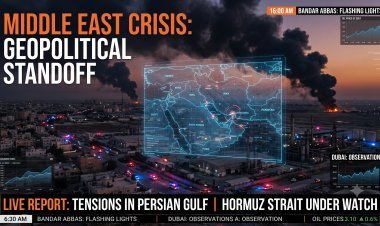
The downing of US assets has sent shockwaves through global markets. Crude oil prices have spiked as the Strait of Hormuz remains a primary target for Iranian maritime militias.
-
The US Stance: The White House has signaled that "all options remain on the table," suggesting a possible strike on Iranian radar hubs.
-
Tehran’s Response: Iranian leadership has hailed the "neutralization of aggressor aircraft" as a victory for national sovereignty, warning that any further incursions will meet a "crushing response."
The Human Cost and the "Pilot Factor"
Beyond the billions of dollars in lost hardware, the focus remains on the pilots. These high-stakes rescue missions highlight the immense psychological pressure on personnel operating in the Middle East today. For viewers of Toofani Khabre, this isn't just about maps and missiles—it's about the lives hanging in the balance at the edge of the atmosphere.
Diplomacy or Decimation?
As the US military prepares for potential retaliatory sorties and Iran bolsters its "Axis of Resistance," the window for a ceasefire is closing. The successful Black Hawk rescue prevented a hostage crisis, but it has not prevented the march toward a larger conflagration.