


Energy Security Pivot: India Secures 30 Million Barrels of Russian Crude Amid Middle East Conflict
"India secures 30 million barrels of Russian crude after US waiver to combat supply shocks from the Iran-US-Israel conflict. Learn how India is navigating the energy crisis."
 Rajeev
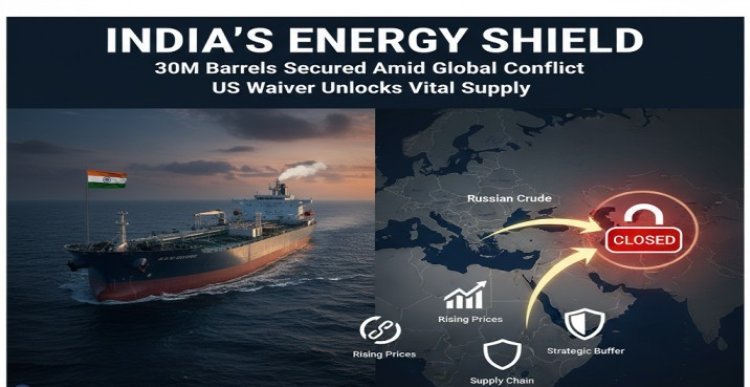

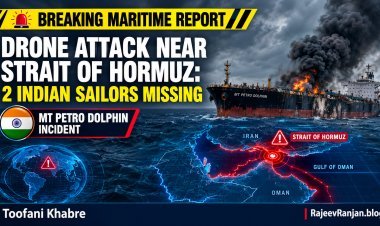
As the geopolitical landscape in West Asia reaches a boiling point, India has taken decisive steps to insulate its economy from a potential energy catastrophe. Following the effective closure of the Strait of Hormuz—a vital artery for global energy—due to the escalating conflict involving the United States, Israel, and Iran, New Delhi has successfully negotiated a critical lifeline.
Under a temporary 30-day waiver granted by the United States, Indian refiners, led by industry giants like Indian Oil Corporation (IOC) and Reliance Industries, have secured approximately 30 million barrels of Russian crude oil. This strategic move serves as a vital buffer against the supply chain disruptions threatening to choke India's energy imports.
The Strait of Hormuz: A Global Chokepoint
The Strait of Hormuz is not merely a maritime route; it is the heartbeat of global energy, with roughly 20% of the world’s oil and LNG supply transiting through its narrow passage. With the conflict effectively shutting down this waterway, the supply of crude oil to Asian markets—including India, which relies on the Middle East for over 50% of its crude imports—has been severely jeopardized.
The disruption has sent Brent Crude prices on a rollercoaster ride, oscillating between $80 and $120 per barrel. For a nation that imports nearly 90% of its crude oil requirements, this volatility presents an existential threat to its macroeconomic stability, inflation targets, and industrial output.
India’s Strategic Pivot to Russian Crude
While India had been diversifying its energy sourcing away from Russia in recent months, the sudden closure of the Strait of Hormuz necessitated an immediate change in tactics. The US waiver applies to Russian crude oil and petroleum products that were loaded onto vessels before March 5, 2026.
By acting swiftly, Indian refiners have managed to redirect tankers already in Asian waters toward Indian ports. These cargoes, which include grades like Urals, ESPO, and Varandey, were previously uncommitted to buyers. By securing these supplies, India has effectively bought itself precious time—estimated to last about five days of consumption—to navigate the current supply crunch.
Beyond Oil: The Broader Economic Impact
The crisis has exposed the fragility of India’s energy-dependent infrastructure. The ripple effects are already being felt across multiple sectors:
-
LPG and Cooking Gas: With nearly 100% of India’s LPG imports passing through Hormuz-linked routes, urban centers are facing supply concerns. The government has invoked the Essential Commodities Act and directed refineries to boost LPG production by approximately 10%.
-
Industrial Costs: Industries ranging from steel, textiles, and mining to glass manufacturing are grappling with rising costs of petrochemical feedstock and coking coal, which are also facing shipping delays.
-
Inflationary Pressure: Economists warn that persistent high oil prices could increase global inflation and slow down economic growth, posing a significant challenge for the Reserve Bank of India (RBI).
The Path Forward: Energy Autonomy
The ongoing crisis has catalyzed a national conversation in India about reducing dependence on imported crude. Experts from the Council on Energy, Environment and Water (CEEW) and other think tanks emphasize that this energy volatility serves as a stark reminder of the urgent need to accelerate the transition to clean, decentralized energy sources.
For now, the government’s "India First" policy remains the guiding principle. By leveraging strategic petroleum reserves, securing temporary waivers, and optimizing domestic production, New Delhi is navigating a high-stakes balancing act. As the situation remains fluid, India's ability to maintain its energy flows will be a testament to its diplomatic maneuvers and strategic adaptability in a volatile global market.