


Legal Loophole? Why Trump’s New 15% Tariff Face a Fresh Court Battle
Explore why President Trump's new 15% global tariff under Section 122 might be unconstitutional following the Supreme Court's landmark ruling on IEEPA duties.
 Rajeev
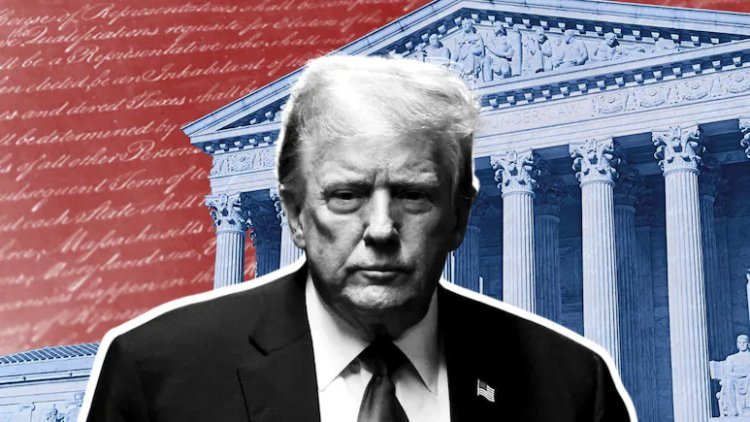

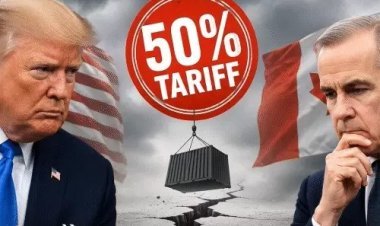
In the world of global trade, 24 hours can change everything. On Friday, February 20, 2026, the U.S. Supreme Court (SCOTUS) delivered a stinging blow to the White House by declaring the "Reciprocal Tariffs" under the IEEPA law illegal. Yet, by Saturday morning, President Donald Trump had already pivoted, announcing a new 15% global import surcharge.
While the administration claims this new move is "legally bulletproof," legal experts and constitutional scholars are already pointing to three major reasons why the 15% tariff might land right back in the courtroom.
1. The "Power of the Purse" Conflict
The core of the Supreme Court's recent 6-3 decision in Learning Resources, Inc. v. Trump was simple: Tariffs are taxes. Under Article I of the U.S. Constitution, the power to tax belongs exclusively to Congress, not the President.
By using Section 122 of the Trade Act of 1974 to impose a blanket 15% tax, Trump is again testing the "Major Questions Doctrine." Critics argue that a president cannot unilaterally impose a massive economic burden on the nation without an explicit, clear mandate from Congress—a mandate that Section 122 may not provide for such a broad, global scale.
2. The "Balance-of-Payments" Debate
Section 122 is a rarely used "emergency" tool designed to address "large and serious United States balance-of-payments deficits." * The Government’s Argument: The administration argues that the $900 billion trade deficit and risks to the U.S. Dollar constitute a payments emergency.
-
The Legal Challenge: Opponents argue that a "trade deficit" (buying more goods than you sell) is conceptually different from a "balance-of-payments crisis" (not having enough foreign currency to pay debts). If a court agrees that there is no actual "emergency," the legal basis for the 15% surcharge evaporates.
3. The 150-Day "Cliff"
Unlike the previous IEEPA tariffs, Section 122 has a built-in expiration date. It is a temporary measure that lasts for only 150 days unless Congress votes to extend it.
-
Any attempt by the White House to extend these tariffs indefinitely without a Congressional vote will trigger an immediate injunction.
-
With mid-term elections approaching in November 2026, the political appetite in Congress to support these taxes is at an all-time low.
What This Means for Indian Exporters
For businesses in India, the situation is a double-edged sword.
The Good News: Since February 24, 2026, U.S. Customs has stopped collecting the old "illegal" duties. This effectively lowered the tariff on many Indian goods from 18% down to 10% (and now 15% as the new surcharge kicks in).
The Bad News: The uncertainty is "economic poison." Importers are hesitant to sign long-term contracts when the legal status of the tariff could change with a single judge’s signature.