


NATO in Crisis: Trump Slams Allies as France and Canada Defy Call to Join Iran Conflict
President Trump warns of a "very bad future" for NATO after France and Canada refuse to join the U.S.-led military mission in the Strait of Hormuz. Read the latest on the 2026 Middle East crisis.
 Rajeev

NATO in Crisis: Trump Warns of "Very Bad Future" After France and Canada Snub Iran War Call
WASHINGTON D.C. | March 17, 2026
The North Atlantic Treaty Organization (NATO) is facing perhaps its most existential threat since its inception. U.S. President Donald Trump has issued a blistering ultimatum to European and North American allies, warning that the failure to support U.S. operations in the Middle East could signal the end of the alliance as we know it.
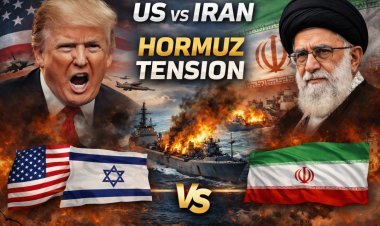
The spark for this latest firestorm? The refusal of key allies—most notably France and Canada—to join a military coalition aimed at reopening the Strait of Hormuz.
1. The Ultimatum: "A Very Bad Future for NATO"
In a series of aggressive statements aboard Air Force One and in interviews with the Financial Times, President Trump singled out NATO members for their "lack of enthusiasm."
"I’m demanding that these countries come in and protect their own territory, because it is their territory," Trump stated, referring to the vital waterway through which 20% of the world’s oil flows.
He followed this with a stark warning: if allies do not step up to police the Strait, it will be "very bad for the future of NATO."
2. France and Canada Draw a Line
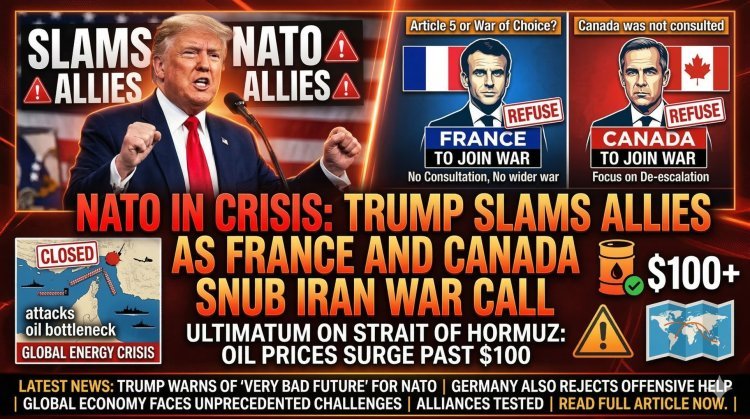
The defiance from Paris and Ottawa has been swift and principled. Both nations have made it clear that while they value the alliance, they will not be "drawn into a wider war" they did not start.
-
France: President Emmanuel Macron has reportedly resisted a "hard sell" from Washington. French officials emphasize that the U.S. and Israel initiated strikes without prior NATO consultation, making this a "war of choice" rather than a collective defense obligation under Article 5.
-
Canada: Prime Minister Mark Carney and Defence Minister David McGuinty have been explicit. "Canada was not consulted, did not participate, and has no plans to participate in offensive actions against Iran," a PMO statement read. Minister McGuinty added that Canada’s focus remains on de-escalation and humanitarian protection.
3. The Economic Stakes: $100+ Oil
The conflict has effectively choked the Strait of Hormuz, sending global oil prices skyrocketing past $100 per barrel. This has created a "bottleneck" at the petrol pumps globally, putting immense domestic pressure on the Trump administration ahead of the upcoming midterm elections.
Trump’s argument is simple: since Europe and China are the primary "beneficiaries" of Gulf oil, they should be the ones sending warships to secure it.
4. A Loyalty Test for the Alliance
Critics and analysts suggest that Trump is using the Strait of Hormuz crisis as a "loyalty test." By demanding military contributions during an active conflict, he is forcing allies to choose between their own foreign policy autonomy and the security umbrella provided by the United States.
| Country | Stance on Joining Military Coalition | Key Reason |
| USA | Leading Offensive | "Regime change" and "Freedom of Navigation" |
| France | Refused | Lack of UN mandate; avoids escalation |
| Canada | Refused | No consultation; focus on de-escalation |
| Germany | Refused | "Not our war" |
| UK | Cautious | Defensive help only; no "wider war" |
The Road Ahead
As the war enters its third week, the "special relationship" between the U.S. and its NATO peers is being tested to its breaking point. With Germany also rejecting the call and Japan citing legal hurdles, the U.S. finds itself increasingly isolated in its military pursuit against Tehran.
The world now watches to see if the "strongest nation in the world"—as Trump calls the U.S.—will proceed alone, or if the cracks in NATO will lead to a permanent fracturing of the Western security order.