


The 18% Question: What Happens to India's Tariffs After SCOTUS Scraps Trump’s Duties?
Discover why India's 18% tariff deal remains in the spotlight after the US Supreme Court's landmark ruling on Trump's reciprocal duties and the new 10% global surcharge.
 Rajeev
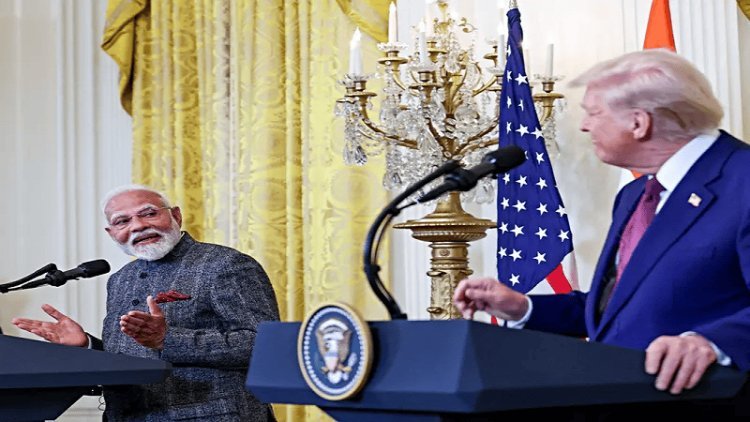

In a landmark judicial move that has sent shockwaves through global markets, the United States Supreme Court (SCOTUS) ruled on February 20, 2026, that President Donald Trump exceeded his authority by using emergency powers to impose sweeping "reciprocal tariffs."
For India, which had recently finalized a hard-fought interim trade deal featuring an 18% tariff rate, the ruling initially seemed like a total reset. However, the subsequent reaction from the White House—and a defiant "nothing happens" stance from the POTUS—has left traders and diplomats scrambling to understand the new reality.
The SCOTUS Bombshell: Why the Duties Were Axed
By a 6-3 majority, the Supreme Court ruled that the International Emergency Economic Powers Act (IEEPA) of 1977 does not grant the President the power to unilaterally impose taxes or tariffs. Chief Justice John Roberts noted that the power to "regulate" importation is distinct from the power to "tax," which belongs solely to Congress.
This verdict effectively invalidated the high reciprocal tariffs (which had reached as high as 50% for India in 2025) that were the centerpiece of the "America First" trade policy.
"Nothing Happens": The POTUS Response
Despite the judicial rebuke, President Trump’s message regarding the India-US trade deal was blunt: "Nothing changes."
While the IEEPA-based reciprocal duties were struck down, the White House immediately pivoted to other legal "tools." Within hours of the ruling, the President signed an executive order under Section 122 of the Trade Act of 1974, imposing a 10% temporary global import surcharge for 150 days.
When asked specifically about India's 18% tariff agreement, Trump remarked:
"They’ll be paying tariffs, and we will not be paying tariffs. The deal with India is on. Prime Minister Modi is a great man, but we did a little flip—it’s a fair deal now."
The Conflicting Math: 18% vs. 10%
There is currently a significant amount of "fine print" confusion. Here is the breakdown of where things stand for Indian exporters:
-
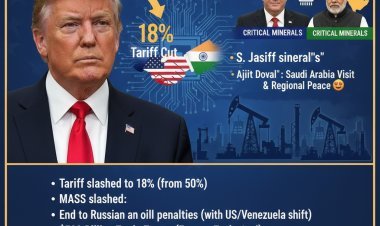
The 18% Deal: Earlier this month, India and the US agreed to a framework where US tariffs on Indian goods would drop from 50% to 18%, in exchange for India removing duties on US agricultural and industrial products.
-
The SCOTUS Impact: Because the 18% was a "reciprocal" rate based on the now-invalidated IEEPA authority, many experts argue that Indian goods should technically revert to Most Favored Nation (MFN) status—which averages just 3%.
-
The New 10% Floor: However, the new 10% global surcharge acts as a new baseline. White House officials have clarified that India will face at least this 10% levy until further "appropriate" rates are implemented under different authorities like Section 301.
Why This Is a "Big Deal" for India
The uncertainty is a double-edged sword for New Delhi.
-
Immediate Relief: In the short term, Indian textiles, leather, and engineering goods are likely to see their duty burden drop from 18% to the new 10% surcharge—a significant saving for exporters.
-
Refund Potential: Indian companies that have paid billions in "illegal" IEEPA-based tariffs over the last year may now be eligible for massive refunds, though the US government has warned the process will be "a mess" in court.
-
The "Steel & Aluminum" Exception: Crucially, tariffs on steel (50%) and aluminum (50%) remain in place, as they were imposed under Section 232 (National Security), which was not affected by the SCOTUS ruling.
What Happens Next?
The trade war hasn't ended; it has simply changed its legal uniform. While the Supreme Court has reasserted the power of Congress, the Trump administration has shown it is willing to cycle through every available statute to keep its tariff wall standing.
For Indian businesses, the "18% deal" remains the guiding star of bilateral relations, but the legal foundation of that deal is now being rebuilt in real-time.