


The Fall of the Architect: Ali Larijani Killed in Strategic Tehran Airstrike
Iran confirms the death of security chief Ali Larijani in a precision Israeli strike in Pardis. Explore the fallout of this major escalation in the Iran-Israel war.
 Rajeev
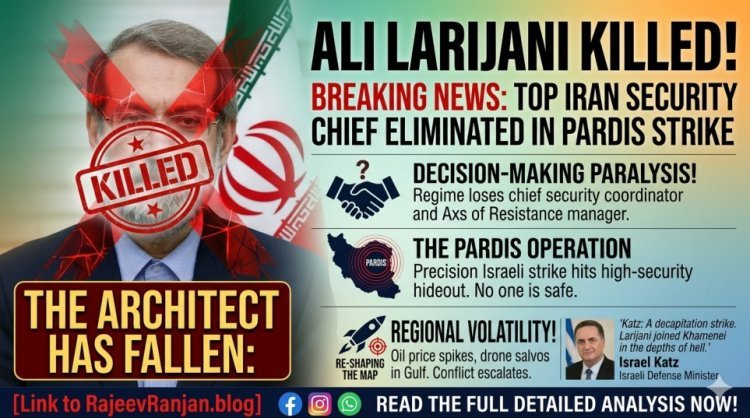

The Pardis Operation: How the Assassination of Ali Larijani Reshapes the Iran-Israel Conflict
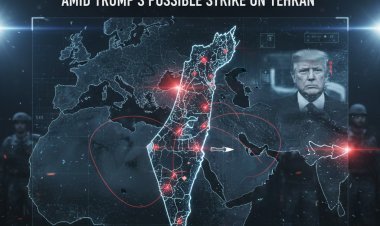
On the morning of March 17, 2026, a massive plume of black smoke over the Pardis area, east of Tehran, signaled a tectonic shift in the ongoing West Asian war. By Tuesday evening, both Jerusalem and Tehran had confirmed the unthinkable: Ali Larijani, the Secretary of Iran’s Supreme National Security Council and a titan of the Islamic Republic’s political establishment, had been killed in a precision Israeli airstrike.
The Midnight Strike in Pardis
According to military intelligence, the operation targeted a high-security residence in Pardis where Larijani was reportedly seeking refuge. The Israel Defense Forces (IDF) executed a "wave of precision strikes," which resulted in the deaths of:
-
Ali Larijani: The de facto leader and chief security coordinator.
-
Morteza Larijani: Ali Larijani’s son.
-
Alireza Bayat: His deputy for security affairs.
-
Gholamreza Soleimani: The powerful head of the IRGC-affiliated Basij paramilitary force.
Israeli Defense Minister Israel Katz described the operation as a "decapitation strike," asserting that Larijani has "joined Khamenei in the depths of hell."
Who was Ali Larijani? The "Ultimate Insider"
Larijani was not merely a bureaucrat; he was a linchpin of the Iranian state. Born into a prestigious clerical family, he bridged the gap between the military elite and the diplomatic corps for decades.
-
Wartime Leader: Following the death of Supreme Leader Ayatollah Ali Khamenei on February 28, Larijani emerged as the primary figure managing day-to-day security and regional military coordination.
-
Nuclear Architect: He previously served as Iran's chief nuclear negotiator and the Speaker of Parliament, earning a reputation as a pragmatic hardliner.
Why This Assassination Changes the Map
The removal of Larijani creates an unprecedented leadership vacuum. Unlike frontline military commanders, Larijani possessed the rare ability to manage both the "Axis of Resistance" military operations and the delicate political signaling required to prevent total state collapse.
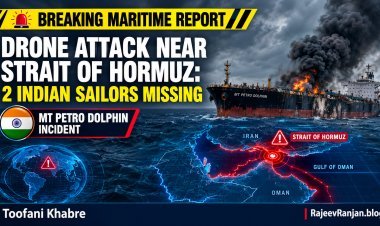
1. Paralysis of Decision-Making: With the Basij chief also neutralized, the regime's ability to suppress internal dissent and coordinate proxies like Hezbollah has been severely compromised. 2. The Message to Tehran: By striking in Pardis—an area previously considered a secure "hideout"—Israel has demonstrated that no official in the Iranian hierarchy is beyond reach. 3. Regional Volatility: The strike has already triggered a spike in global oil prices and retaliatory drone salvos across the Persian Gulf, impacting transit hubs in Dubai and the Strait of Hormuz.
Tehran’s Response: Martyrdom and Vengeance
Iranian state-linked media, including Fars News, have labeled Larijani a "martyr of the Islamic Revolution." President Pezeshkian expressed deep condolences, vowing that "the path of resistance will not falter." Funerals are expected to draw massive crowds in central Tehran, serving as both a mourning period and a mobilization effort for the next phase of the conflict.